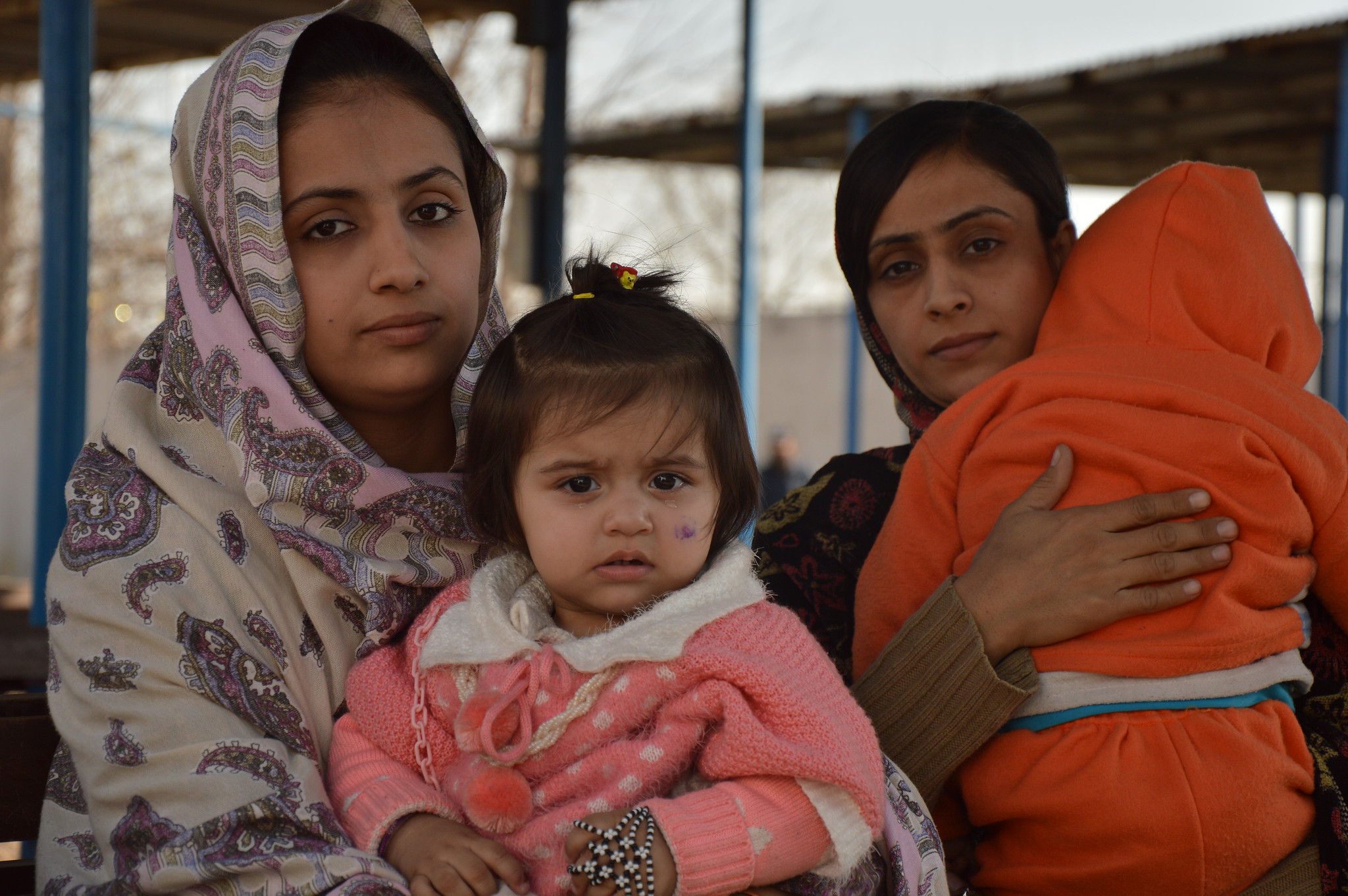
Credits: Afghan refugees at a UNHCR voluntary repatriation centre near Peshawar, Pakistan, February 2016. © European Union/ECHO/Pierre Prakash
By Muhammad Naman
In 2023, the Pakistani government tightened its immigration laws with the launch of the Illegal Foreigners' Repatriation Plan. The plan has principally affected Afghan nationals living in Pakistan, including women and children. In the concluding observations adopted on 29th April 2026, the UN Committee against Torture noted its concern that the return policy does not assess individual protection needs and might lead to disastrous situations. The central concern is non-refoulement: whether the authorities identify those who could face torture on return before sending them back.
During the review and finalization of Pakistan's second periodic report, the Pakistani delegation informed the Committee of the measures the Government had taken to document and verify identity and recheck documents during administrative procedures. As the Government explained, these checks are intended to manage returns. Their adequacy, however, depends on whether they also identify and prevent returns that could expose a person to torture. Furthermore, documents alone are not enough to make removals legal.
UNAMA’s July 2025 report describes a former Afghan special-forces soldier forced back from Pakistan after police visited his home. He reported threats tied to his former service and said security personnel shot him in the leg in December 2023; he later fled to Iran. UNAMA does not establish whether Pakistan assessed his personal risk before removal. The account exposes a crucial distinction: verifying identity would not, by itself, reveal whether return could expose him to retaliation. That question required an individual assessment.
Pakistan's Legal Obligations
Pakistan has not joined the 1951 Refugee Convention or its 1967 Protocol; it has ratified the Convention against Torture and Other Cruel, Inhuman or Degrading Treatment or Punishment (CAT). Under Article 3 of CAT, a State Party is forbidden to return or to extradite an individual to another state where there exist substantial grounds for believing that he or she would be subjected to torture. This duty applies to the authorities regardless of the immigrant's immigration status, suggesting that the end of residence documents does not mean the end of the obligation to not send someone back to torture. The UN Committee against Torture examined Pakistan's compliance with its obligations but did not determine that all Afghan returns are unlawful.
Pakistan told UNAMA that complaints cells were established for returnees. Its statement does not explain whether those cells can assess personal risks of torture or halt removal. Checking documents and reviewing a protection claim are different tasks.
The Committee's guidance on the steps states need to take in assessing risk is found in General Comment No. 4 (2017). According to paragraph 11, authorities should consider conditions in the country of origin, as well as the individual's situation, including whether they are a member of a targeted group. Former Afghan security personnel facing retaliation over their previous service are one such example. Paragraphs 13 and 18 also identify safeguards, including individual examination, information about the reasons for removal, legal assistance, interpretation as necessary, and an independent appeal that will halt the removal. It also requires an opportunity for people to raise their concerns before removal.
Pakistan's Constitution does not leave foreign nationals without legal protection. Under the Constitution of 1973, Article 4 protects citizens and every other person for the time being within Pakistan, and no one can be deprived of life or liberty without following lawful procedure under Article 9. Although these articles do not provide a permanent right of residence, they do state that immigration matters should be handled within the Constitution. Nor can the absence of a national asylum law displace the duty under Article 3 of CAT to assess a credible risk of torture: that duty remains even though Pakistan has not enacted a comprehensive asylum system.
Human Rights and Safeguards Before Return
Returns also raise rights concerns beyond the prohibition of torture. Pakistan ratified the Convention on the Rights of the Child and is bound under Article 3 to treat children's best interests as a primary consideration in decisions affecting them. Children's views must be considered, in accordance with their age and maturity, and protections should be put in place wherever possible without discrimination. Any child who is removed also has basic rights, such as the right to a school education, health care and family life. Thus, any evaluation of return should also consider children's ability to receive education, adequate medical care, and be safe with family members, where possible. Authorities ought to follow the guidelines of the UN on children in migration, which explicitly include sustainable reintegration into the home country. The important questions about children's well-being will not be answered if a decision to remove a child is based only on the information on the parents' documentation.
For a child, an individual assessment should consider family separation, schooling and essential care, and explain how the child’s best interests were weighed. These safeguards do not give every family a general right to remain, but prevent the parents’ documentation status from being treated as the entire answer.
Authorities have an extra responsibility due to the serious consequences of returns for Afghan women and girls. UN Women reports that the Taliban have limited their education, jobs, and medical care. UNICEF has also highlighted girls' exclusion from secondary education. Before making removal decisions, Pakistan should involve child-protection specialists when children are affected and give women confidential, gender-sensitive opportunities to explain their individual risks. Human rights preparedness means identifying such risks before removal, ensuring access to interpreters and legal help, and making review available while a person is still in Pakistan.
For comparative guidance, in Chahal v. United Kingdom (1996), the European Court of Human Rights explained that protection against return to torture or other prohibited ill-treatment cannot be balanced against national-security concerns. The judgment (paragraph 151) requires independent scrutiny of the alleged risk, regardless of the grounds for expulsion. The judgment does not bind Pakistan. Its relevance is comparative: it shows why a review confined to whether removal was administratively authorised, without examining the danger alleged, is insufficient. The reviewing authority must be able to consider that danger independently before removal occurs.
The Committee against Torture's recommendations in its 2026 concluding observations on Pakistan call for individual assessments pending the adoption of a national asylum framework. It also called for effective remedies, in particular judicial oversight and review. In view of the gaps identified in Pakistan’s return procedures, the government must act and share information about who receives protection claims, who processes them, and how removal can be suspended. Decisions should also explain how evidence of danger was evaluated, rather than merely record whether a person holds valid documents.
This does not mean that all Afghan refugees face the same risks. It means that a return programme cannot assume that none does. Whether Pakistan complies with its international obligations depends on identifying and assessing danger before removal. Every affected Afghan should have a genuine opportunity to explain what awaits them at home before they are sent back.
Bio

Muhammad Naman is a law graduate of Dr. Muhammad Iqbal Law School, Government College University, Lahore, and an Associate at Farani Taylor Solicitors. His research interests include forced migration, refugee protection, and international human rights law. He has interned at Khan & Associates, AUC | LAW and The Citizens Foundation.