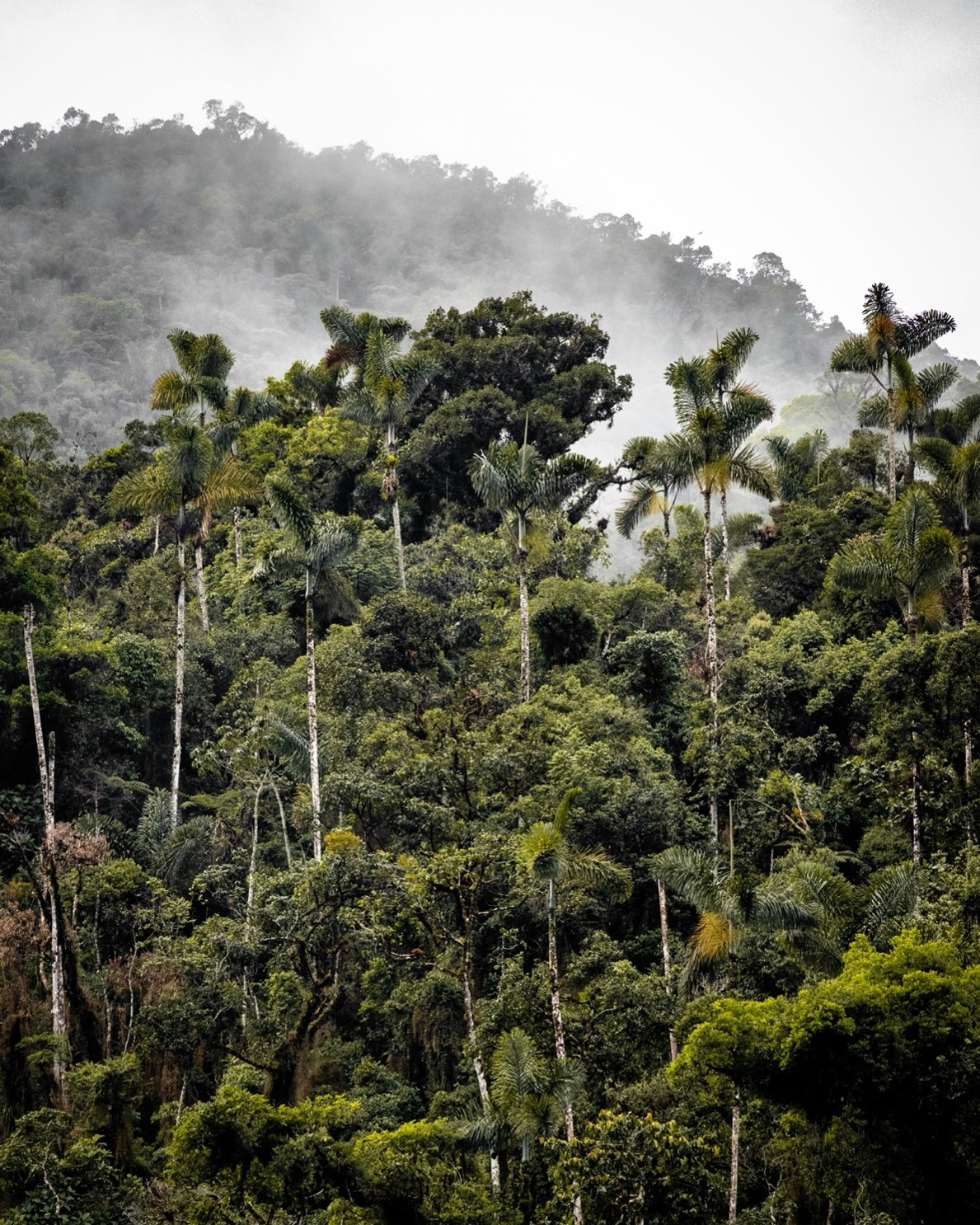
Credits: Amazon Rainforest, Photo by Renting C on Unsplash
By: Juliette Bormann
Climate litigation has expanded beyond the present, courts are no longer only dealing with the damage that has already happened. They are also being asked to respond to risks that will unfold in the future. This also means that Climate litigation increasingly seeks to protect not only present generations, but also those yet to be born. This raises a difficult legal question, can people who are not yet born, or children whose adult lives will be shaped by climate change, be treated as rights-holders today?
The Colombian Supreme Court answered this question in the landmark case Future Generations v Ministry of the Environment and Others in 2018. The Case was brought by 25 children and young people against Colombian state authorities. They argued that the government’s failure to prevent deforestation in the Amazon, despite its climate and zero-deforestation commitments, threatened the fundamental rights to life, health, food, water, and a healthy environment of both current and future generations. In 2015, alongside its commitments under the Paris Agreement, Colombia had committed to achieving net zero deforestation in the Colombian Amazon by 2020. Yet deforestation in the region increased by 44% in 2015 to 2016.
The plaintiffs asked the Court to order the State to fulfil its obligations to halt and achieve net zero deforestation in the Amazon. The Court agreed and ordered the government to adopt an action plan against deforestation, create an Intergenerational Pact for the Life of the Colombian Amazon (PIVAC), and take immediate measures to protect the forest. Additionally, the Court went one step further and recognised the Colombian Amazon as a subject of rights.
This post argues that the judgment is important because it allows future climate harm to be addressed as a present violation of fundamental rights. At the same time, the case shows that even ambitious rights-based judgments do not automatically produce effective environmental protection in practice.
Tutela: Framing the case as a rights violation
The plaintiffs brought the case through a tutela, a constitutional mechanism which is designed to protect individual fundamental rights. This was significant because environmental protection is often treated as a collective interest. To bring the case within the scope of the tutela, the plaintiffs framed deforestation and climate change as threats to their fundamental rights.
The Court accepted the Case by emphasising the “interrelation of the right to health with the right to a healthy environment.” Thus, it held that a healthy environment is not merely a collective interest but that it is indispensable for the enjoyment of individuals fundamental rights. Crucially, the Court’s reasoning went beyond only treating the State’s failure to prevent deforestation as a violation of present generations individual rights. It stated that “deterioration of the environment is a serious attack on current and future life and on other fundamental rights” because “it gradually depletes life and all its related rights” (see page 15). On this basis the court treated projected climate impacts on future generations as an ongoing constitutional violation requiring preventive action (see § 11.2).
Future generations as rights-holders
The most innovative part of the judgement is its recognition of intergenerational rights, expanding constitutional rights beyond currently existing individuals. The Court reasoned that the protection of fundamental rights and the enjoyment of current environmental conditions does not only concern current generations but also includes “the unborn” as legal subjects, stating that “the protection of fundamental rights not only involves the individual but implicates the ‘other’” including people in other places, non-human life such as ecosystems but also plant species and animals, and the unborn (see § 5.2).
Simultaneously, the Court established the environmental rights of future generations by recognising the value of nature beyond serving human interests. It stated that these rights are based on “(i) the ethical duty of the solidarity of the species and (ii) the intrinsic value of nature” (see § 5.3). In doing so, the Court went beyond a purely anthropocentric framework.
However, the Court’s treatment of “future generations” is conceptually not fully developed. The Court appeared to incorporate the youth plaintiffs within this category, describing them as among those who will suffer the consequences if Colombia fails to meet its zero-deforestation target (see § 11.2). By refraining from drawing a clear distinction between present and future persons, the Court strengthened the claim of future generations by linking future harm to present generations whose lives will extend into future climate scenarios. This transforms future harm into a constitutional issue, as the failure to act today constitutes an ongoing violation of rights that will materialise over time.
However, the Court did not clarify the implications of refraining from drawing a clear distinction. It remains unclear whether future generations constitute an independent category of rights-holders, or whether they are solely understood as an extension of present generations. This ambiguity is consequential as it leaves open questions about representation, scope, and how and by whom the rights of future generations are to be defined and enforced in practice.
Human rights or rights of nature?
A further tension concerns the Court’s reliance on both human rights and rights of nature to justify the protection of future generations. On the one hand, the Court protected the Amazon because deforestation threatens human rights over time. On the other hand, the Court recognised the Colombian Amazon as a “subject of rights,” grounding protection in the intrinsic value of nature (see § 14 and § 5.3).
The Court failed to explain how these two approaches relate to one another, or whether they operate within a single framework. Therefore, it remains unclear whether the protection of future generations is justified because environmental harms affect human interests over time, or because nature itself possesses value independent of human use.
These two approaches can support the same result but are conceptually distinct. This suggests that the Court treated the rights of nature and the rights of future generations as mutually reinforcing, without addressing the possibility that they may rely on distinct and potentially competing justifications and outcomes.
Assessing Implementation and Impact of the Case
The Court adopted an ambitious approach. It ordered a national action plan within four months, an intergenerational pact within five months, municipal land-use planning measures, and immediate action within forty-eight hours (see section 3: Decision). This shows the potential of climate litigation, courts can set legal standards, impose deadlines, and require governments to justify their inaction.
However, implementation and compliance have remained uneven and key measures such as the PIVAC remain incomplete or delayed. Deforestation rates have also fluctuated, at times increasing, rather than consistently declining.
At the same time the ruling has had important institutional and social effects. It has reshaped constitutional reasoning in Colombia, contributed to new policy debates, and provided civil society with a strong legal benchmark. Moreover, it has inspired youth climate activism and supported the growing recognition of rights of nature across multiple ecosystems.
Nevertheless, the effects of the Court’s ambiguity become visible in criticism of the rapid expansion of rights of nature reasoning without clear regulatory frameworks. The judgment left important questions unresolved about how rights of nature should be regulated, implemented, and balanced against the rights of affected communities. Bejarano (Dejusticia) points out “we have rivers with rights (…) but we still don’t have a law or a decree that creates a regulation about the rights of nature.” Critics argue that prioritising nature risks sidelining affected communities, particularly Indigenous groups, and that the ruling has at times been used to justify aggressive anti-deforestation measures (such as Operación Artemisa), raising tensions between environmental protection and human rights.
Future Generations v Ministry of the Environment is a landmark case because it stretches constitutional rights across time. The case illustrates both the transformative potential and the limits of climate litigation. Courts can articulate ambitious legal principles and even set specific time limits to implementation of the decision, but their effectiveness ultimately depends on political will and institutional capacity beyond judicial control. The ruling shows that legal recognition does not automatically produce environmental protection. However, the lesson is not that climate litigation is ineffective, but rather that the efforts toward climate justice do not stop in the Courts.
Bio

Juliette Bormann is a student at Leiden University College, majoring in International Justice. Her main interests are Environmental Law, Human Rights, Women’s Rights, and Gender Equality. She was a research participant in the Research Clinic for “Climate Litigation for Future Generations” under the Supervision of Professor Otto Spijkers.