By: Engin Firat
In its human rights form, climate litigation protects people; biodiversity litigation protects habitats and species listed in them. Each works through a proxy, and both proxies stand in for a deeper interest that neither regime names. That interest is the capacity of an ecosystem to persist under stress, its ecological integrity. This post argues that the two fields have been protecting that same interest all along, and that Rights of Nature, the legal development that recognises ecosystems as holders of rights, make it directly justiciable. The Mar Menor, a saltwater lagoon on Spain’s south-eastern coast that in 2022 became the first ecosystem in Europe to be granted legal personhood, is illustrative of what follows once a court can protect that interest directly. The shift is conceptual. Once the shared interest has a name, the two fields can meet.
The anthropocentric premise of climate litigation runs deep, and the field’s most celebrated recent victory confirms it. In Verein KlimaSeniorinnen Schweiz and Others v Switzerland, the European Court of Human Rights (ECtHR/Strasbourg) expanded standing and positive obligations in climate cases, but it did so for human applicants and struck out the individual claims for want of victim status. That premise is not shared everywhere. The International Court of Justice, the International Tribunal for the Law of the Sea and the Inter-American Court of Human Rights (IACtHR) have all been asked to state climate obligations in terms that do not turn on identifying an individual victim. It is in Strasbourg that the rights-holder remains the gateway, which is one reason for taking the ECtHR as the hardest case for what follows.
Biodiversity litigation starts from the other side, with habitats rather than people, yet it too litigates a proxy. What it tests is whether a protected site or a listed species has been adequately conserved, not whether the ecosystem behind the designation can still function. Conservation law is not undemanding. Article 6(3) of the Habitats Directive asks whether a plan will adversely affect ‘the integrity of the site’, and the Court of Justice of the European Union has read that phrase strictly. But it has also read it narrowly. In Sweetman (para 39) the integrity of the site meant the lasting preservation of the habitat type for which the site had been listed, measured against the conservation objectives set for it. The question is whether those listed features will survive the plan, not whether the lagoon, river or bog that carries them can still work as a system.
Two dockets, one blind spot
Climate and biodiversity law developed as largely separate fields, each with its own treaties, institutions and remedies: the climate regime under the United Nations Framework Convention on Climate Change and the Paris Agreement, the biodiversity regime under the Convention on Biological Diversity and, in Europe, the Habitats Directive. The case law inherits that separation. So, for a long time, did the science governance. The Intergovernmental Panel on Climate Change (IPCC) and the Intergovernmental Science-Policy Platform on Biodiversity and Ecosystem Services (IPBES) produced their first joint report only in 2021, warning that climate change and biodiversity loss compound each other and cannot be addressed in isolation.
The litigation mirrors that division. Climate cases run through the rights to life, private life or property (Articles 2 and 8 of the European Convention on Human Rights (ECHR/Convention) and Article 1 of Protocol No. 1), while conservation and pollution control both run through a designated thing, a site, a species or a water body measured against a standard set for it. Each captures only one dimension of ecological decline.
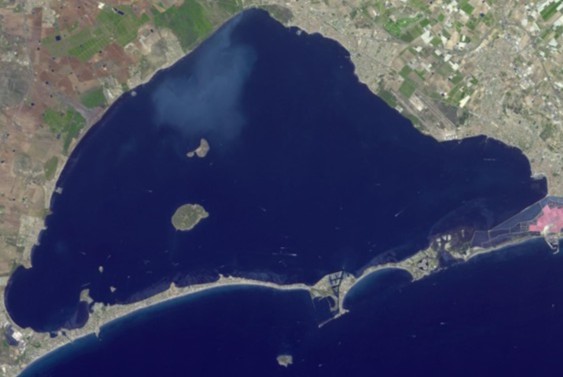
The Mar Menor shows what that division misses. Spain’s largest coastal lagoon, separated from the Mediterranean by the narrow sandbar of La Manga, collapsed in instalments. An algal bloom in 2016 turned the water into what locals called ‘a green soup’ and killed some 85 per cent of its benthic vegetation, and anoxic crises in 2019 and 2021 left tonnes of dead fish on the beaches. Nutrient runoff from intensive agriculture and rising water temperatures were not competing explanations; they compounded, acting on a single system. The harm therefore fell between the two regimes. The immediate driver was pollution, but warming waters helped push the lagoon past its tipping point.
Ecological integrity as the missing legal interest
The concept is already surfacing in legal texts. Spain’s Law 19/2022, the statute that gave the Mar Menor its legal personhood, speaks of the lagoon’s right ‘to exist as an ecosystem and to evolve naturally’ (Article 2). The IACtHR would later invoke the ‘integrity and functioning of ecosystems’ in its 2025 Advisory Opinion on the climate emergency, discussed below (OC-32/25, para 279).
Nor is the idea wholly foreign to European law. European Union legislation already pursues ‘good ecological status’ under the Water Framework Directive (Article 4(1)(a)(ii)) and ‘favourable conservation status’ under the Habitats Directive (Articles 1(e) and 2(2)), as Rehnström has pointed out. Those thresholds, however, are regulatory benchmarks against which state conduct is measured; they are not themselves the object of legal protection. What Rights of Nature add, as Chapron, Epstein and López-Bao have argued, is precisely that step. Nature ceases to be only an object of regulation and becomes a subject of rights, so that ecological integrity is protectable in its own name.
Two consequences follow. The first is conceptual. Degradation becomes a justiciable harm in and of itself. Erosion of an ecosystem’s capacity to persist counts as an injury whatever the vector, rather than as evidence of someone else’s loss. The second is practical, and arguably underrated. An integrity claim can accommodate complex, interacting causal relationships. Human-rights climate litigation must usually disentangle causal chains linking state conduct to an individual applicant’s harm, a burden the individual applicants in KlimaSeniorinnen were unable to discharge. The ECtHR set the threshold for victim status ‘especially high’, requiring both an intense exposure to the effects of climate change and a pressing need for individual protection (paras 487-488), and held that they did not meet it (paras 533-535).
Conservation litigation, by contrast, confines itself to designated harms. That confinement has practical consequences. A claim under the Habitats Directive can ask whether the lagoon’s listed habitat types and species remain in ‘favourable conservation status’ (defined in Art. 1(e) of the Directive); it cannot ask whether nutrient loading and rising temperatures, working together, have carried the lagoon past the point of recovery. The remedy is limited in the same way, since it follows the designation rather than the system. An integrity claim takes the compound injury as its object, and never needs to allocate it to a single stressor.
A qualification is needed. An integrity claim does not settle who owes the duty. In the Topillo prosecution, discussed below, the defendants are private operators and the officials who authorised them; against a state, the claim would have to be framed as regulatory omission, in the failure to set or enforce nutrient limits or to plan for warming waters. Apportionment between polluters still has to be worked out, and emitters outside the jurisdiction remain beyond reach. What legal personality changes is the position of the claimant. A single subject can bring several duty-bearers into one proceeding and ask for the system to be restored, without each claimant tracing a chain from a particular actor to a loss of their own.
The Mar Menor as proof of concept
Spain was not the first jurisdiction to take this step. Ecuador gave the rights of nature constitutional standing in 2008 and Bolivia legislated for them in 2010; New Zealand conferred legal personality on Te Urewera in 2014 and on the Whanganui River in 2017; Colombian courts recognised the Atrato River in 2016 and the Amazon in 2018. What is unusual about the Mar Menor is less the step than the setting: the first ecosystem in Europe to hold rights, granted them by ordinary legislation brought forward on a citizens’ initiative, in a legal order where environmental regulation is already dense. That makes it a reasonably clean test of what personality adds where the regulatory tools are not lacking. The idea’s roots are Indigenous and Global South, so its arrival in a Spanish statute reads as borrowing, not invention.
Law 19/2022, born of a popular initiative, recognised the lagoon and its basin as a legal person (Article 1), set up guardianship bodies to speak for it (Article 3), and opened standing to defend its rights (Article 6). Critics called the law largely symbolic, saying existing environmental law already did the job. The Spanish Constitutional Court disagreed. It upheld the law as an expression of ‘moderate ecocentrism,’ resting its legitimacy on an uncomfortable fact: four decades of conventional protection had failed to halt the lagoon’s decline (STC 142/2024, FJ 3).
In May 2026 the Mar Menor appeared for the first time at trial as acusación particular, the injured party, in the Topillo case, a criminal prosecution concerning agricultural pollution. The organisations that represented it appeared as victim, seeking compensation to restore the ecosystem. Strictly, this is pollution litigation rather than climate litigation, which is exactly the point.
It is worth saying what personality added here, since the prosecution could have gone ahead without it. What it could not have done was treat the lagoon as the party injured. Without personality the organisations had to appear in their own name or through acción popular, the offence charged framed the remedy, and compensation was owed to those who could show a loss of their own. With it, restoration of the ecosystem becomes the measure of what is owed. Once the protected interest changes, the procedural machinery follows the ecosystem: victim status, standing, guardianship, and remedies aimed at restoration. It is infrastructure that a future integrity-based climate claim could inherit.
Who may speak for an ecosystem
That infrastructure only works, however, if someone is entitled to set it in motion on the lagoon’s behalf. Climate litigation already knows the problem of the absent claimant. Future generations cannot tell their own stories, and litigation on their behalf leans on narrative. Ecosystems face the same predicament, and the Mar Menor answers it institutionally. As Monica Feria-Tinta notes, two models have emerged for who speaks for nature: (1) open standing, open to anyone, as in Ecuador, and (2) guardianship, with designated guardians, as with the Atrato River in Colombia. The lagoon uses both. Article 6 of Law 19/2022 lets any natural or legal person act in its defence, yet the action is brought, in the statute’s words, in the name of the ecosystem as the true interested party. That is open, representative standing. It is not a classic actio popularis, because the party in whose name the claim runs is the lagoon itself.
So, who may speak for the lagoon’s ecological integrity? In principle, anyone. But ‘in principle’ is doing a lot of work, because what open standing means in criminal procedure is contested. In February 2024 the Provincial Court of Murcia refused to let environmental organisations act on the lagoon’s behalf in one strand of the same Topillo prosecution. Its reasoning was procedural. Representation of the lagoon, the court held, belongs to the Committee of Representatives for which Article 3 of the Law provides, and that body had not then been constituted; the organisations were not directly injured within the meaning of the rules of criminal procedure, so acción popular was the only route open to them. The rights had been created before the arrangements for exercising them were in place. After the Constitutional Court declined the resulting appeal in July 2024, one of the applicants took the question to Strasbourg later that year, where the application is still pending. The contest over who may stand for the lagoon has itself become part of the record.
Beyond Spain
If ecological integrity is the interest these disputes share, the bridge it offers is no longer only relevant to Spain. In Advisory Opinion OC-32/25 on the climate emergency, the IACtHR became the first international court to recognise nature and its components as subjects of rights, and it did so inside a climate opinion. The opinion passed by four votes to three, a sign of how contested the question remains, and built on Colombian rulings recognising the Amazon and, more recently, the Santurbán páramo as rights-holders.
Europe is more cautious, and here the argument meets its hardest test. A recent EJIL:Talk! symposium set out the puzzle. Strasbourg already treats corporations as rights-bearing ‘persons’ under the ECHR, as it has done since Comingersoll v Portugal (paras 31-36), yet since Kyrtatos v Greece it has maintained that the Convention does not protect against the general deterioration of the environment as such (para 52). If a corporation qualifies, why not an ecosystem that a state has itself turned into a legal person? Writing in that symposium, Judge Eicke gives the sobering answer. The Convention’s ‘legal person’ grew out of corporate personhood, and is, in his words, human-centric at heart. A person created by the respondent state’s own statute may not even count as ‘non-governmental’ under Article 34 of the ECHR, the provision that defines who may apply to the ECtHR. On this reading, inadmissibility is the likely outcome of any application brought in the lagoon’s name. Even so, a refusal would force the ECtHR to explain why a legal person at home is not a ‘person’ in Strasbourg, and the integrity framing sharpens rather than dissolves that question.
Something of the kind has already happened outside Spain, though not in a court. In July 2025 a Swiss federal office granted an access-to-documents request concerning measures taken under the Swiss Climate Protection Act, and treated the Mar Menor itself, as a foreign legal person, as the applicant.
What ecological integrity changes
Legal personhood is no panacea. Discharges into the lagoon continue, the design of its guardianship bodies is disputed, and the attribution problems noted earlier have not gone away. But the claim that existing tools were enough has aged badly. Ramsar listing, Natura 2000 status and the Nitrates Directive all applied to the Mar Menor, and none of them prevented its collapse. What the toolbox lacked was not another management plan but a legal subject in whose name the harm could be claimed. The next step is easy to picture: adaptation measures, nutrient limits or heat-resilience planning owed to the lagoon itself. Whether Spanish courts would accept such a claim is uncertain. That it can be pleaded at all is the change.
Legal shifts often begin by changing the questions we ask, not the answers courts give. Alongside asking how a destabilised climate harms people, or whether a designation has been respected, we can now ask what protects the ecological integrity of a system under compound stress, and who may demand it. Rights of Nature may matter less for changing climate law than for changing what climate litigation understands itself to be protecting.
Bio

Engin Firat is a PhD candidate at the City Law School, City St George’s, University of London. His doctoral research examines the procedural architecture of climate litigation before the European Court of Human Rights, and the recalibration of admissibility for systemic climate harm. His broader interests include international human rights law, climate justice and minority rights, and Rights of Nature.