![]()
By: Elena Kavanagh
The climate and biodiversity crises are environmental issues of existential significance for Indigenous peoples. Safeguarding Indigenous rights is important for many reasons, including that it is an adequate strategy for effective conservation efforts and for restoring the planetary boundaries. Indigenous peoples’ territories make major contributions to biodiversity conservation, and their ecological integrity is sustained through Indigenous governance, stewardship, and protection practices.
After centuries of discrimination and efforts to engage in diplomacy, starting most notably with Chief Deskaheh, who is considered by some as the first Indigenous, Indigenous peoples are now becoming active participants in discussions about environmental human rights. Their centuries-long legal traditions display their relational understanding of the world. Indigenous perspectives are essential for transformative environmental change, but their meaningful and equitable participation is challenging, as colonialism, according to Anghie, is central to the formation of international law. This blog entry will explore the link between environmental human rights and Indigenous rights, highlighting the importance of Indigenous voices beyond the concept of the “Global South”.
I. Indigenous Peoples and the “Global South”: Beyond Geography
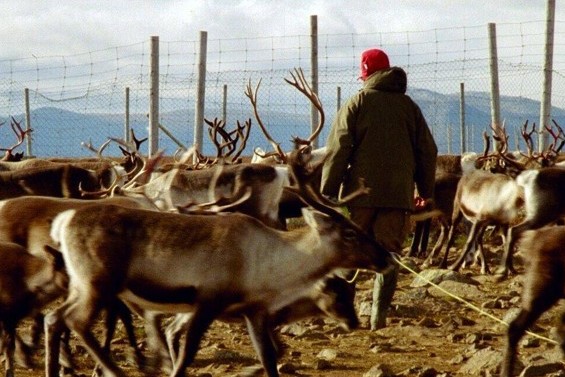
The terms “Global South” or “Third World” are commonly used to describe states marked by colonial histories and economic inequality, though they carry very different genealogies and contemporary connotations. "Third World" emerged during the Cold War as a political category referring to states aligned with neither the US-led capitalist bloc nor the Soviet-led communist bloc; over time, it became a shorthand for economic underdevelopment and is now widely regarded as outdated and pejorative. "Global South" has largely replaced it in academic and policy discourse, functioning as a more neutral geographical descriptor that signals structural inequities without the hierarchical baggage of its predecessor. Nevertheless, it remains a broad-brush term that can obscure as much as it reveals. Indigenous peoples do not fit neatly within this geopolitical shorthand. They are present across both the geographic South and North – from Amazonian territories to Arctic and sub-Arctic regions represented by the Sámi Council, Inuit Circumpolar Council, RAIPON, etc. Nordic states are typically categorised as part of the Global North, which is often portrayed as the collective “coloniser” of the South. However, Northern and Arctic Indigenous communities continue to confront land dispossession, as demonstrated through the legal implementation failure of the Fosen case (Statnett SF et al. v. Sør-Fosen sijte). This clearly resembles the legal dynamics frequently associated with the Global South.
Amitav Acharya’s reconceptualisation of the “Global South”, that looks past and beyond the Westphalian form as a relational and historical condition, rather than a strictly geographic category, helps illuminate this complexity. For Acharya, the Global South reflects shared experiences of colonialism and limited voice in global governance, largely as historically marginalised in knowledge production. Indigenous peoples can be understood as occupying a “Global South position” within international legal and political hierarchies. The wealth or geopolitical status of the Northern states in which some of them reside is not a barrier to their joining the “Global South” cohort. They experience structural exclusion from decision-making, epistemic marginalisation of their knowledge systems, and disproportionate exposure to environmental harm.
At the same time, Indigenous peoples cannot simply be subsumed under the “Global South” rubric, because their marginalised status is distinct. It has been so characterised by enduring relationships to specific territories from time immemorial, as defined by José Martínez Cobo in his foundational study on Indigenous populations. International law recognises them as distinct collective rights-holders. The United Nations Declaration on the Rights of Indigenous Peoples (UNDRIP) affirms rights to self-determination, land, culture, and Free, Prior and Informed Consent (FPIC). Convention No. 169 of the International Labour Organization further emphasises the “special importance” of Indigenous peoples’ relationship with their lands and territories (Article 13.1). These rights derive not from developmental status but from the survival of distinct legal orders.
For many Indigenous communities, land is an essential part of their identity as they are intimately connected with it by the basis of identity, spirituality, governance, and intergenerational continuity. Ecological destruction therefore threatens not only livelihoods but collective existence. The Inter-American Court of Human Rights recognised this interdependence in Advisory Opinion OC-23/17, affirming that environmental degradation can directly violate Indigenous rights to life, integrity, and culture. Similarly, in Pueblo Indígena Kichwa de Sarayaku v. Ecuador, the Court held that oil exploration undertaken without meaningful consultation and consent violated territorial rights and cultural survival. Environmental harm in these contexts constitutes ontological rupture: it disrupts relationships between human and more-than-human communities that form the foundation of Indigenous law and identity.
Indigenous peoples, similar to many populations in the Global South, have shared histories of colonial extraction and environmental injustice. However, their claims are rooted in a profound relational ontology and are based on a distinct legal framework established in UNDRIP.
II. Indigenous Legal Orders and the Rise of Rights of Nature
Indigenous cosmologies and legal traditions have played a formative role in the global emergence of Rights of Nature jurisprudence. This relational ontology has directly influenced constitutional and judicial developments. Ecuador’s 2008 Constitution, shaped by Andean Indigenous understandings of Pachamama, recognises Nature as a subject of rights with standing before courts. Bolivia followed with the Law of the Rights of Mother Earth (2010), which recognises Mother Earth as a collective subject of public interest endowed with rights to life, biodiversity, water, and restoration. Bolivia’s legislation represents one of the clearest attempts to embed Indigenous cosmology into positive environmental law, linking ecological protection with post-extractive development discourse.
The legal personhood of the Whanganui River in Aotearoa New Zealand reflects Māori cosmology encapsulated in the expression “Ko au te awa, ko te awa ko au” (“I am the river and the river is me”). The Te Awa Tupua (Whanganui River Claims Settlement) Act 2017 establishes a guardianship model in which Te Pou Tupua (the human face of the river) consists of two persons: one appointed by the Crown and one appointed by Whanganui iwi.
In Colombia, the Constitutional Court of Colombia delivered a landmark judgment in 2016 (T-622/16), recognising the Atrato River as a rights-bearing entity. The Court articulated a doctrine of “biocultural rights”, explicitly linking ecosystem protection with the cultural survival and governance authority of Indigenous and Afro-descendant communities. Rather than treating environmental protection and collective rights as separate spheres, the Court merged them together.
These developments demonstrate that Indigenous cosmologies have doctrinal force. Rights of Nature frameworks often emerge from Indigenous epistemologies that uphold interconnectedness and reject the strict human–Nature divide characteristic of Western legal traditions.
III. Self-Determination, Global Governance, and Harmonising Environmental Rights
Indigenous peoples act as international political actors through paradiplomacy, striving to assert authority over cross-border territories and knowledge systems. Indigenous engagement in initiatives such as the Summit for the Future is evidence of their growing recognition.
Unfortunately, their participation often remains tokenistic and limited to observer status. This reflects broader colonial hierarchies within global governance. Acharya’s critique of international order highlights how actors positioned within the Global South frequently encounter structural barriers to meaningful influence. This struggle is shared by the Indigenous peoples.
Self-determination means authority over development pathways and land use decisions. However, Article 1 of the International Covenant of Civil and Political Rights (ICCPR) and Article 3 of UNDRIP establish a framework of just internal self-determination, rather than claims to external sovereignty. This distinction is crucial, because Indigenous peoples lack full sovereignty over their lands. The Sarayaku judgment demonstrates that failures of consultation substantively violate the principle of self-determination.
Concerns sometimes arise regarding potential tensions between Indigenous territorial rights and broader environmental human rights, particularly where conservation measures restrict access to ancestral lands. Such tensions often derive from colonial conservation models that exclude Indigenous communities in the name of environmental protection. Empirical evidence consistently demonstrates that Indigenous-managed territories have higher biodiversity and lower rates of deforestation than state-controlled protected areas.
Conclusion
Indigenous peoples do not fit neatly within the broad category of the “Global South”, as they are distinct peoples situated within sovereign states. Although they generally lack internationally recognised state sovereignty, they maintain longstanding pre-colonial and continuous relationships with their ancestral territories. However, their shared experiences of colonial dispossession and its enduring legacies create overlapping vulnerabilities with the countries of the “Global South”. This commonality may provide a foundation for meaningful alliances and solidarities.
Indigenous peoples challenge anthropocentric foundations of environmental law and offer relational alternatives. Their perspectives are reshaping environmental human rights discourse. The nexus between Indigenous rights and Rights of Nature frameworks signal an emerging paradigm in which ecological integrity and collective identity are understood as interconnected.
Bio

Elena Kavanagh is a Research Affiliate at Centre for the Study of Existential Risk, University of Cambridge and a Legal Advisor at the Arctic Youth Network.