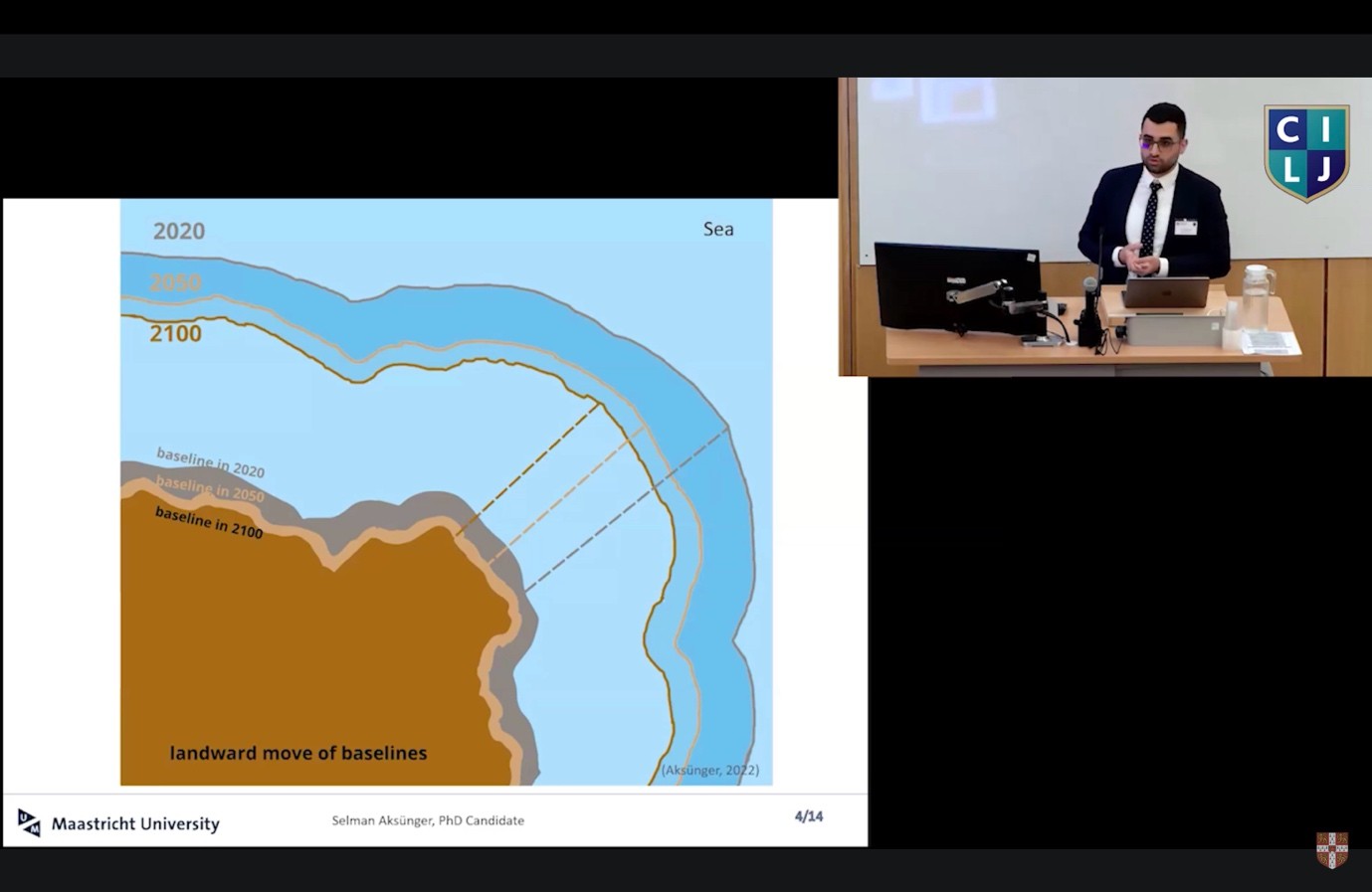
Credits: Selman Aksünger
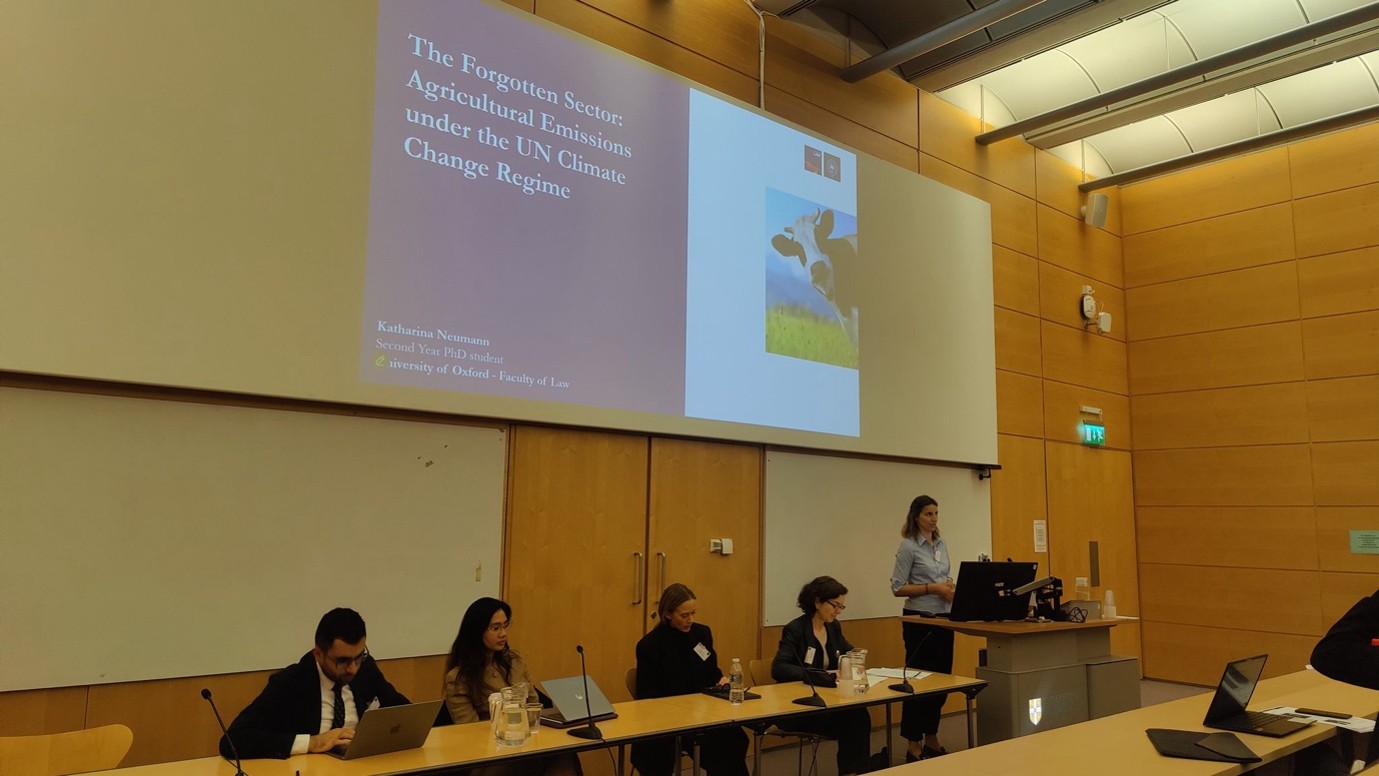
This post is a reflection on the 14th Annual Conference of the Cambridge International Law Journal, held at the Faculty of Law, University of Cambridge, on 28–29 April 2025, under the theme “Navigating a Multipolar World: Challenges to the Post-WWII Status Quo of International Law”. The author’s attendance at the conference was supported by the NNHRR Conference Attendance Grants scheme.
Introduction
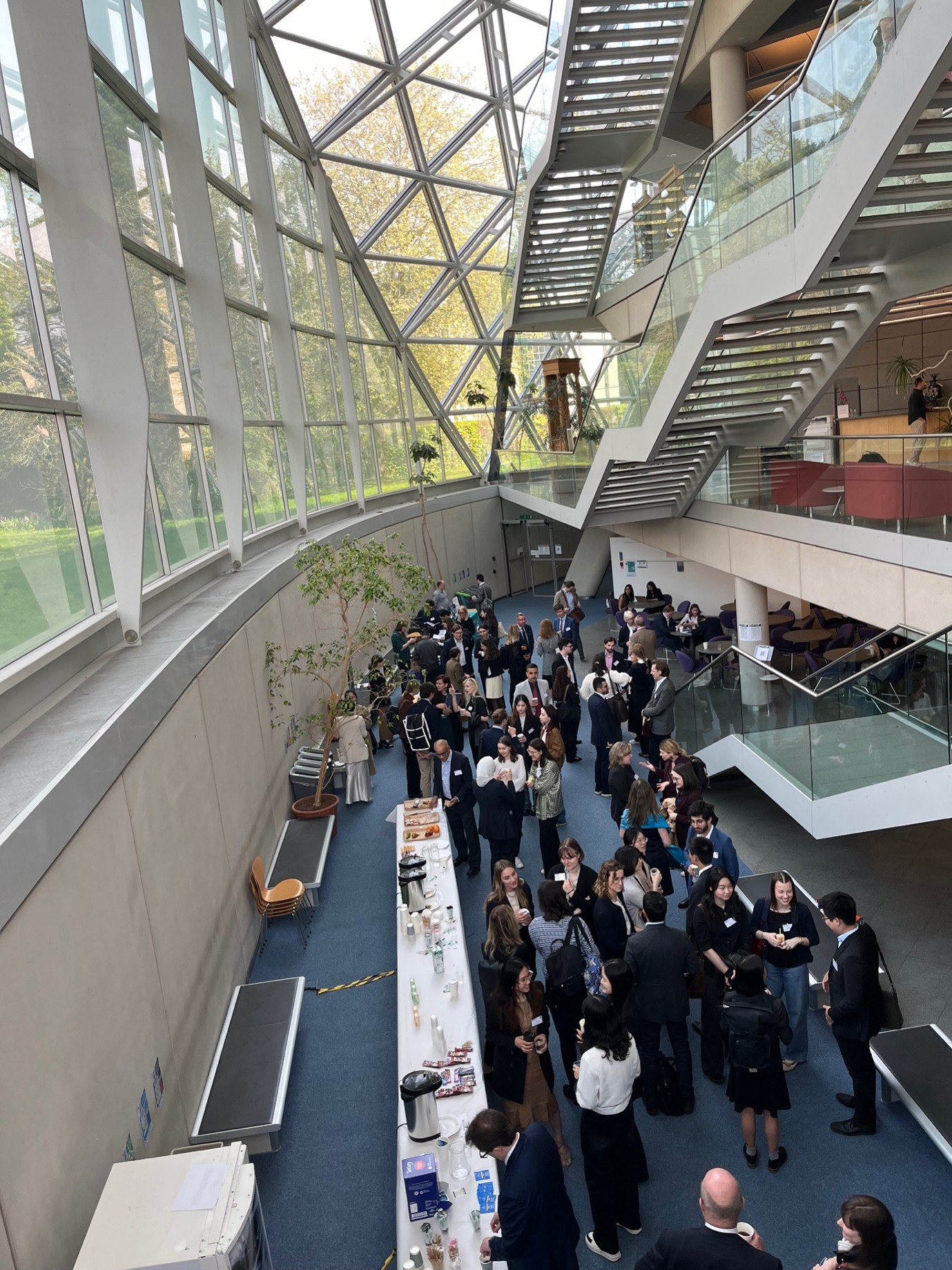
Eighty years after the United Nations Charter (‘the Charter’) was signed, the legal order it built feels at once indispensable and unusually exposed. It was against this backdrop that scholars, practitioners and judges convened at the Faculty of Law, University of Cambridge, on 28 and 29 April 2025, for the 14th Annual Conference of the Cambridge International Law Journal. The theme, "Navigating a Multipolar World: Challenges to the Post-WWII Status Quo of International Law", marked the Charter's anniversary and framed two days that were, by turns, anxious and quietly hopeful. In its fourteenth version, the Annual Conference has grown into a genuine scholarly hub: with several academic publishers present, it was a chance to meet in person editors and authors known until then only through email about book proposals and forthcoming work. For a doctoral researcher presenting on sea-level rise, one question ran beneath almost every panel: can the order that has carried human rights this far withstand what is coming next?
The protection of human rights since 1945 has never advanced in a straight line. It has been gaining moral value in some decades and losing it in others under the weight of particular crises. Across eight decades, however, the trajectory has bent upward: after each shock the system has tended to recover, and to recover at a higher baseline. The end of the Cold War, for all its disappointments, widened the space for accountability; even the present strain on the Charter system and on international criminal justice has so far provoked defence as much as decay. The Cambridge conference complicated this picture. It suggested that climate change may be the crisis to test the pattern most severely, while showing that international lawyers have begun to confront its human rights dimensions well before the most severe consequences of climate change including the mass displacement, statelessness, and the possible loss of habitable territory materialise.
Can the Law of the Sea Keep Pace with a Changing Planet?
This was nowhere clearer than in the two keynote addresses, delivered by Judge Tomas Heidar, President of the International Tribunal for the Law of the Sea (ITLOS), and by Judge Bogdan Aurescu of the International Court of Justice (ICJ), among those judges closest to the recent climate-related advisory opinions. To hear them reflect, in person, on proceedings most participants had encountered only in print was among the conference's most significant contributions.
Judge Heidar addressed ITLOS's Advisory Opinion of 21 May 2024, delivered at the request of the Commission of Small Island States on Climate Change and International Law. That opinion confirmed that the UN Convention on the Law of the Sea (UNCLOS) obliges states to protect the marine environment from climate change, treating the Convention as a living instrument capable of meeting challenges its drafters never anticipated. Building on this reading of the Convention as an adaptive instrument, Judge Aurescu offered a rarer, double perspective on sea-level rise, drawing on both his prior work within the ILC and his current role on the bench of the ICJ. Before joining the ICJ he had served as Co-Chair of the International Law Commission's Study Group on sea-level rise in relation to international law, which between 2019 and 2025 worked on the stability of maritime zones, the continuity of statehood, and the protection of persons affected. His account of how the International Law Commission (ILC) reshaped its methods to respond quickly and concretely to the needs of the states most at risk was among the most instructive moments of the conference. At the time of the 14th Annual Conference, the ICJ's advisory opinion on the obligations of states in respect of climate change was still pending, following its historic hearings; it has since been delivered, on 23 July 2025, adding a further layer to a fast-developing jurisprudence.
Permanent Sovereignty over Natural Resources
Building on these themes, one of the conference papers, "Permanent Sovereignty over Maritime Zones: A Response to Sea-Level-Rise-Induced Coastal Instability", examined the proposal that Small Island Developing States might "freeze" their baselines, fixing the maritime zones charted and deposited with the UN Secretary-General under UNCLOS even as the coastline retreats beneath rising seas — that is, as sea-level rise progressively submerges low-lying coasts, low-tide elevations, and, in extreme cases, entire habitable land masses, thereby altering the geographic baselines from which maritime zones are measured (para 355). The traditional rule that "the land dominates the sea" (a principle articulated by the ICJ in the North Sea Continental Shelf Cases, at para 96, and reaffirmed in subsequent maritime delimitation jurisprudence) presupposes a stable coast, an assumption that climate change is steadily dissolving. The paper argued that fixing baselines is better understood not as a defiance of the Convention but as a creative adaptation of it: an effort to preserve legal continuity where geography can no longer be relied upon. The stakes are far from abstract. For states confronting partial or total submersion, the survival of their maritime entitlements is bound up with that of their economies, populations, and ultimately their statehood also expressed by ILC Study Group as “their survival as a State might be in play owing to the impact of rising sea levels.”
Beyond the paper itself, one thread across the parallel conference panels proved particularly striking. A fellow speaker in the earlier decolonisation panel traced the Front Polisario's litigation, the series of proceedings brought by the Sahrawi liberation movement Frente POLISARIO before the Court of Justice of the European Union challenging the extension of EU-Morocco trade and fisheries agreements to products originating in occupied Western Sahara to halt phosphate shipments mined in occupied Western Sahara, an argument grounded in the right to self-determination and permanent sovereignty over natural resources of the Sahrawi people as the non-self-governing population of the territory. The argument echoed the themes used in the presentation on the sea-level rise and thus paved the way for a scientific communication for issues related to Small Island Developing States. Although the two situations differ factually, one concerns a colonised people on a contested land territory, the other a state population confronting the physical disappearance of its territory, both invoke the same normative architecture. Two very different communities, colonised peoples and disappearing island states, were invoking the same legal principle of permanent sovereignty to assert their rights against states, international organisations, and commercial enterprises whose economic and political leverage far exceeds their own. Both mobilise self-determination and permanent sovereignty over natural resources not merely as principles of decolonisation, but as ongoing entitlements that bind third states and international organisations to respect the resource base on which the survival of a people or a state depends. Therein lies the human rights significance of a multipolar world: international law is not only the instrument of hegemonic actors and permanent members of the UN Security Council, but a language the vulnerable can wield to claim a standing they would otherwise be denied.
Conclusion: Preparing for the Defining Rupture
The post-1945 trajectory of human rights, resilient as it has been, has bent towards greater protection, and it is the product of institutional design rather than mere contingency. It is the product of states, lawyers, institutions and affected communities repeatedly refusing to let crises harden into collapse. The ICJ and ITLOS advisory opinions, the ILC work on climate change, and the litigation strategies of the Small Island Developing States and self-determination movements each show the post-1945 international legal order doing what it has always done: rebounding, reaching higher.
There is, nonetheless, reason for a measured appraisal of the international legal order's continuing adequacy. Among the many challenges the 14th Annual Conference surveyed, climate change emerged as the most pervasive and the most defining. It does not respect the doctrinal categories on which the post-war order rests territorial sovereignty, non-refoulement, state responsibility, and the law of the sea baselines; it threatens the very land on which sovereignty rests. It may prove the largest rupture the international system has faced since the Second World War, the Cold War, and the dissolution of the Soviet bloc. International lawyers have begun early, mapping responsibility and remedy before large-scale climate displacement which is projected to take place in coming decades, the potential extinction of low-lying states, and cascading breaches of economic and cultural rights materialise, though far remains to be done. Whether the post-1945 order's demonstrated capacity for doctrinal adaptation and institutional renewal holds will depend on whether the discipline, and the community it serves, is prepared. The time to prepare is now.
Bio

Dr Selman Aksünger completed his PhD at Maastricht University and joins the Faculty of Law at Istanbul University.