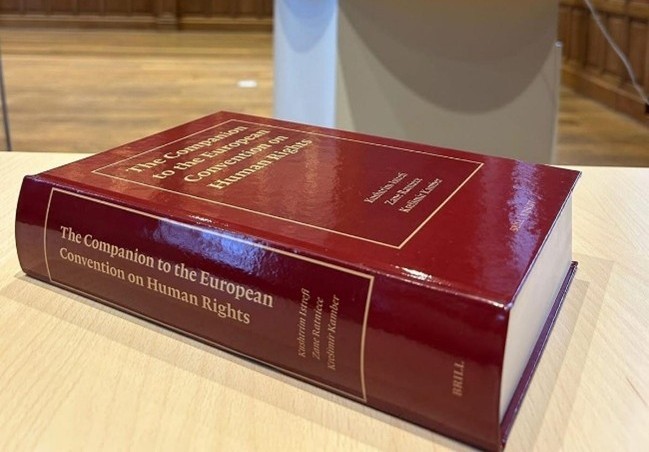
Credits: Kushtrim Istrefi
On a very snowy day, like a classical Dutch painting, on 7 January 2026, scholars, lawyers, and judges from the European Court of Human Rights (ECtHR or Court) came together at Utrecht University for the book launch of ‘The Companion to the European Convention on Human Rights’. The book was edited by Kushtrim Istrefi, Zane Ratniece, and Krešimir Kamber. The event both explained the journey of the Companion, including how the project began, and reflected on the future of the Convention system. The book launch was organised with the support of the Netherlands Network for Human Rights Research (NNHRR).
The Companion is the first compilation and analysis of nearly 300 ECHR notions and concepts on Convention rights, principles, procedures, and institutions. Its innovative contribution lies in its concept-based approach, which disaggregates these notions and examines them individually rather than through a purely article-by-article structure. This makes the Companion particularly important for bringing these concepts together systematically. The ECtHR has developed its own human rights language through concepts, and every legal analysis, decision and practice requires a solid understanding of this conceptual framework. Additionally, the Companion explains how these concepts have evolved over time and how the ECtHR applies them in its case law. Therefore, the Companion would be highly valuable not only for academics, practitioners, and judges, but also for junior scholars and early-career professionals.
After the welcoming remarks by Dr Kushtrim Istrefi, the event commenced with a speech by former ECtHR judge Professor Paul Lemmens. Professor Lemmens first recalled that his initial involvement with the project dated back seven years. He reflected on the meaning of the term “Companion”, emphasising that it does not merely restate the text of the European Convention on Human Rights (ECHR or Convention) but also guides the reader in understanding, interpreting, and applying it. He underlined that the Companion captures the essence of each topic and noted that it would be beneficial for a broad audience.
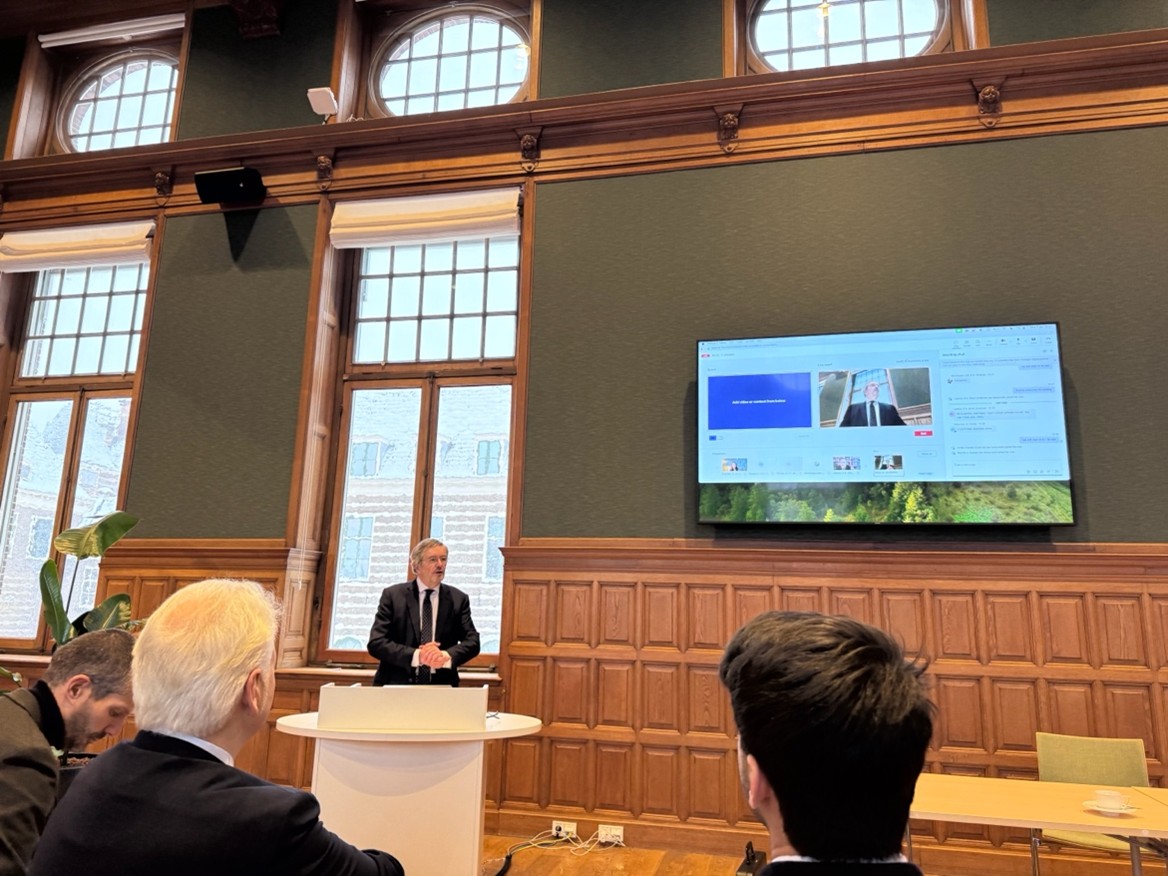
The event then continued with two sessions. The first focused on the journey of the Companion and its scope, while the second addressed the future of the ECHR system. In the first session, two editors of the Companion, Kushtrim Istrefi and Zane Ratniece (Judicial Cooperation Officer in Core International Crimes, Eurojust), spoke, and the session was chaired by Professor Antoine Buyse, director of the Netherlands Institute for Human Rights (SIM) in Utrecht.
First Session

Dr Istrefi explained the system of autonomous concepts and their importance for methods of interpretation. The Companion focuses on autonomous concepts by dividing them into two main categories. The first category consists of concepts that derive directly from the text of the ECHR. Since the Engel v. the Netherlands judgment, the ECtHR has developed its own definitions and meanings for notions such as “life,” “torture,” “liberty,” “fair trial,” “expression,” “possessions,” and “association.” This category also includes concepts derived from the Court’s supporting instruments, particularly the Rules of Court, which introduce certain concepts that are not expressly stated in the Convention itself, such as “interim measures”, The second category consists of concepts that do not explicitly appear in the Convention but have been created and developed by the ECtHR over time. These concepts serve as interpretative tools for Convention rights, such as the “very essence of a right,” “European consensus,” “margin of appreciation,” the “living instrument” doctrine, and “vulnerability.”
Dr Istrefi also recalled the words of Andrea Bianchi that “the game of interpretation involves strategic manoeuvres by different players, each employing their own ‘cards’ to achieve desired outcomes.” Dr Istrefi suggested that interpretation should be approached as a strategy rather than as a game.
Ms Ratniece explained the contributors to the Companion, noting that they include a large number of leading experts in ECHR law. In her speech, she described how the authors structured their contributions, beginning with an explanation of each concept and then examining whether the concept derives from the Convention or from the Court’s case law. The authors shed light on existing standards and approaches related to the respective notions, while also identifying any consistencies or inconsistencies. This common structure ensures coherence and consistency across the contributions, each of which is between five and ten pages in length.
Second Session
The second session continued with speeches by ECtHR Judge Mykola Gnatovskyy, Dr Corina Heri, and Professor Rick Lawson, and was chaired by one of the Companion editors, Dr Krešimir Kamber (Adviser, Private Office of the Secretary General and the Deputy Secretary General of the Council of Europe). The session was titled “The Future of the Convention System: between progress and backlash”. Against the backdrop of Russia’s expulsion and many contemporary issues, such as climate change, many of these issues raised during the speeches and discussions were particularly insightful.
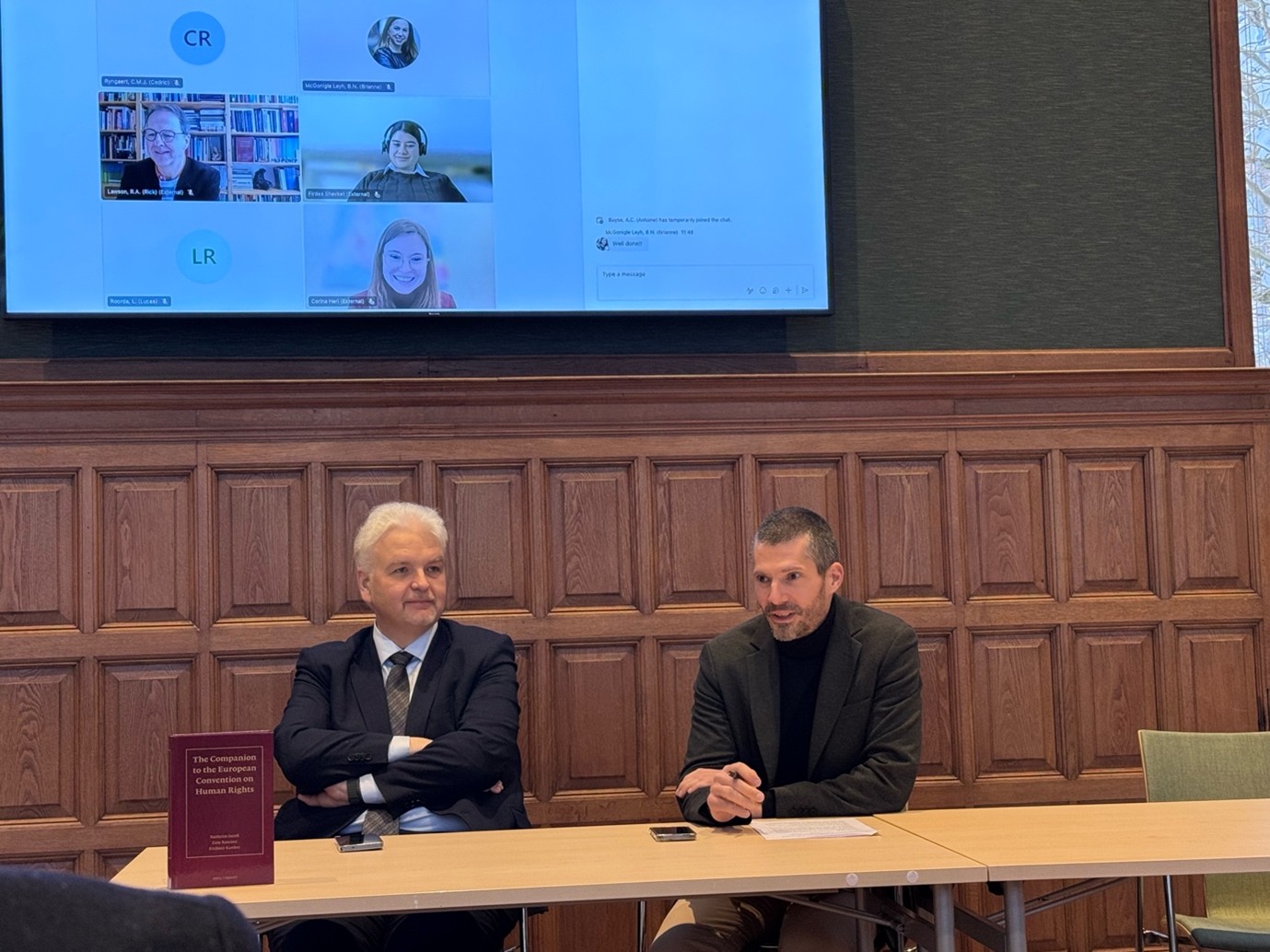
Dr Heri, who authored six contributions to the Companion, also reflected on the future of the ECtHR and emphasised the selective engagement of Member States. Professor Lawson argued that overcoming backlash cannot be achieved through legal responses alone, and that greater attention must also be paid to the political dimension of the system. He emphasised that strengthening the connection between law and politics would be crucial for the future of the ECHR system.
Following Dr Heri speech, Judge Gnatovskyy focused on Russia’s failure to uphold its joint commitments and underlined the importance of maintaining the willingness of Member States to remain within the ECHR system. He recalled that the original purpose of the Convention system was a peace project in the aftermath of the Second World War. The Convention, he stressed, not only protects individual rights but also constitutes a significant instrument for peace. In this context, he highlighted the importance of focusing on the role of national judges and on how Convention law should be applied at the domestic level.
Overall, the book launch of the Companion provided an insightful introduction to a significant and much-needed contribution to ECHR law. It also highlighted a range of contemporary issues that are significant to the sustainability of the Convention system.
Bios
Naz Yılancıoğlu is a PhD candidate at Maastricht University, Department of Public Law.

Dr Kushtrim Istrefi is an Associate Professor of Human Rights Law at Utrecht University.