This entry is part of the Interview Series Marking the 60th Anniversary of the Adoption of the ICCPR and its First Optional Protocol
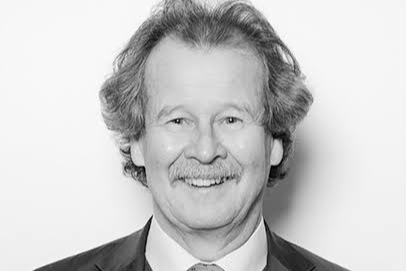
As part of the course International Human Rights Law in Practice within the LL.M. International Human Rights Law at the University of Groningen and to mark the 60th anniversary of the International Covenant on Civil and Political Rights and its First OP, we had the honour and privilege of holding an interviewing Professor Manfred Nowak on the drafting history, development, and continuing significance of the International Covenant on Civil and Political Rights and its First Optional Protocol.
Few scholars have left as profound a mark on international human rights law as Professor Nowak. A renowned academic, former United Nations Special Rapporteur on Torture, and long-time advocate for human rights worldwide, he has spent decades shaping both the theory and practice of international human rights protection. During our interview, Professor Nowak shared his reflection on the drafting of the International Covenant on Civil and Political Rights (ICCPR), offering valuable insights drawn from a lifetime dedicated to the advancement of human rights.
1. From your perspective, what were the most decisive political tensions shaping the drafting of the ICCPR in the 1950s and 1960s?
These were the tensions between the West (above all, the US under the Eisenhower Administration) and the Communist States (above all the USSR) during the time of the Cold War, which had started with the Korea War in 1950.
2. Looking at today’s political climate and the current UN machinery, if the ICCPR were drafted today, what structural or substantive features do you think would look fundamentally different?
At that time, people still thought of the concept of “negative rights” (civil and political rights) as opposed to “positive rights” (economic, social and cultural rights). Today we know that there are no negative and positive rights but only negative and positive State obligations, which apply to all human rights. The obligation to respect is a negative obligation not to unduly interfere, whereas the obligations to protect and fulfil are positive obligations to take action to protect individuals against violations by private parties and to fulfil human rights by means of a broad variety of legislative, administrative, judicial and political measures. In other words, the distinction between negative obligations in Article 2 ICCPR and positive obligations to take steps with a view to achieving progressively the full realization of these rights in Article 2 ICESCR would no longer be relevant. All positive obligations are subject to the principle of due diligence, i.e. to take all steps that can reasonably be expected from States to protect and fulfil human rights. Of course, these obligations can only be progressively implemented.
Furthermore, no international treaty is currently drafted because of the extremely negative climate towards human rights today. The only draft convention on the rights of older people has been stalled for many years without any chance of success. That’s why human rights treaties like the two UN Covenants mentioned – the ICCPR and the ICESCR – would probably be much weaker today than 60 years ago. However, the strong distinction between civil and political rights on the one hand and economic, social and cultural rights on the other, would probably not be present in an international treaty that is drafted today.
3. Looking at the travaux préparatoires, are there provisions of the ICCPR whose contemporary interpretation significantly departs from what the drafters originally envisioned?
Think about the prohibition of cruel, inhuman or degrading punishment (Article 7 ICCPR). At the time of the drafting of the Covenants, capital and corporate punishment were still widely practiced and, therefore, not considered as constituting ill-treatment in violation of Article 7 ICCPR. Capital punishment was even explicitly excluded from the right to life in Article 6 ICCPR. However, a dynamic interpretation of the Covenant has lead to, first, the absolute prohibition of corporal punishment and has later also been used as an argument against the death penalty, despite the wording of Article 6. Another good example would be conscientious objection to military service which is exempted from the prohibition of forced or compulsory labour in Article 8(3)(c)(ii). Nevertheless, the Committee gradually took the view that despite the wording in Article 8 (“in countries where conscientious objection is recognized”), conscientious objection to military service is protected by freedom of conscience in Article 18 ICCPR.
4. The decision to adopt two separate Covenants instead of one comprehensive treaty is often described as a political compromise. In hindsight, do you see that split as strengthening or fragmenting international human rights law?
In 1950, the UN General Assembly called upon the Commission on Human Rights to adopt a single Convention (Res 421(V)), based upon the interdependence of all categories of human rights, as provided for in the Universal Declaration of Human Rights 1948. However, in 1951 the UN General Assembly, being pressured by the US and other Western States, called upon the Commission to draft two different Covenants with two different sets of implementation instruments (Res 543(VI)). This decision, which was taken only by a very small majority, was by no means a compromise but it split the United Nations in the middle as John Humphrey, the Canadian Director of the UN Division of Human Rights who had submitted a first draft for the Universal Declaration, criticised in his memoirs. In retrospect, we can say that this – the splitting of these two documents – was a major mistake with far-reaching and long-lasting consequences during the time of the Cold War and thereafter.
5. Was the individual complaints mechanism under OP1 seen as revolutionary at the time, or as a cautious experiment?
The individual complaints mechanism was already laid down as an optional basis in the European Convention on Human Rights of 1950. If States accepted this procedure, individual complaints were considered by an independent European Commission of Human Rights and, if States also made the respective optional declaration, finally to be decided by the European Court of Human Rights. This was the model Western States wanted to apply to the ICCPR, although the idea of a World Court of Human Rights, which had been proposed already in 1948 by the Australian Minister of Foreign Affairs H.V. Evatt, had not been further pursued. That is why the OP1 entrusted the Human Rights Committee as a quasi-judicial body with the examination of individual communications on an optional basis. This was not revolutionary, but the lowest common denominator between Western, Socialist and Southern States, as the travaux préparatoires clearly show.
In 1950, the UN General Assembly called upon the Commission of Human Rights to proceed with the consideration of provisions, to be inserted into a single covenant for all human rights, “for the receipt and examination of petitions from individuals and organizations with respect to alleged violations of the covenant” (Res 421(V)). With the Commission being dominated by proponents of State sovereignty, the final draft in 1954 did not contain any provision for individual complaints.
Twelve years passed before the UNGA returned to this issue. Indeed, the proposals and counter-proposals made by different countries at that time can be found in the travaux préparatoires. In 1966, the Netherlands moved in the Third Committee for the insertion of an Article 41bis, which was to facilitate an optional right of communication on the part of individuals and groups. Jamaica even proposed to make this procedure obligatory. This was met by strong opposition from Socialist States who viewed individual communications against States as a violation of State sovereignty, a threat to international relations and a departure from the principle that individuals were not subjects of international law. As a compromise, ten States (Canada, Colombia, Costa Rica, Ghana, Jamaica, the Netherlands, Nigeria, Pakistan, the Philippines and Uruguay) proposed a fairly weak optional communication procedure to be inserted in the ICCPR. But since the Socialist States made it known that the adoption of this proposal in the text of the
Covenant would threaten its chances for ratification, the Lebanese representative proposed an OP. At Nigeria’s initiative, a roll-call vote was held. The Lebanese proposal was approved by the scant majority of 41:39, with 16 abstentions. The Socialist States had voted in favour, most Western States against, and the States of the South without much uniformity. The final version of the 1st OP was based on a Nigerian proposal which clearly followed the Ten-States’ draft. While the ICCPR was adopted unanimously in the UNGA, the 1st OP was adopted with two votes against (Niger and Togo) and 38 abstentions (e.g. all Socialist States, Japan, Spain, Greece, Yugoslavia, Haiti, Senegal, Tanzania, Cameroon, Syria, Saudi Arabia, India and Thailand).
The OP was by no means revolutionary, but more a cautious experiment at the universal level during the ideological debates of the Cold War. It was only thanks to the courageous initiative of a few States from around the world (above all the Netherlands, Canada, Jamaica, Costa Rica, Uruguay, Nigeria, Ghana, Lebanon, Pakistan and the Philippines) that the individual communication procedure was finally adopted in a separate OP, which was much better than an optional clause within the Covenant as in CERD. However, the formulation and procedure is fairly weak (communications instead of complaints, final views instead of decisions, only a written procedure among other issues).
Thank you, Professor Nowak, for imparting your knowledge and insights with us.
Bio

Sooriyan Nisha Thangeswaran holds an LL.B. in International & European Law from the Hague University of Applied Sciences and is currently in pursuit of a double-specialization LL.M. in International Human Rights Law and Public International Law at the University of Groningen.
Osmar A. Muñoz Rodríguez holds an LL.B. in Dutch Law from the NHL Stenden University of Applied Sciences and has completed an LL.M. in International Human Rights Law at the University of Groningen.

Henrietta Daly is currently completing an LL.M. in International Human Rights Law at the University of Groningen.