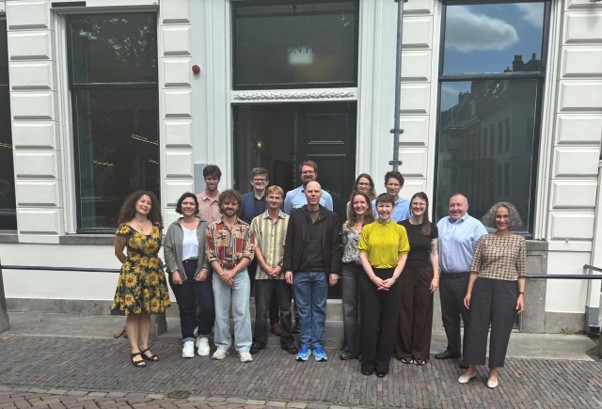
Credits: Participants of the workshop 'Legal Protection of the Mind' by Gerben Meynen
How should the law respond when technology can increasingly influence the way we think, decide, and behave? This question formed the basis of the NNHRR-funded workshop Legal Protection for the Mind: Towards a Normative Evaluation of Psychological and Neurotechnological Influence on Behavior, which took place on 2 July 2026 at Quinton House, Utrecht, the Netherlands. Bringing together perspectives from neuroscience, psychology, ethics, and law, the workshop explored this question and discussed possible directions for the law to address some of the challenges at the intersection of technological innovation and fundamental rights. The workshop did not simply treat technological development as something to which law and ethics must respond. Instead, it created a space to think about the deeper values that should shape the law in the era of fast technological progress.
For a long time, our mental states and cognitions have been considered to be largely inaccessible to others, playing out in our brains, which are shielded by a solid scull. However, emerging technologies are rapidly changing this assumption, as they increasingly enable influencing or controlling people’s opinions, intentions, emotions, and cognition. Examples include different forms of online manipulation, such as through algorithmic amplification, dark patterns, and addictive designs. Another example are neurotechnologies that modify brain activity with the aim of altering mental states and processes, such as non-invasive brain stimulation to increase attention or to reduce aggressiveness in forensic patients.
The programme was structured around a central distinction: direct and indirect forms of behavioral influence. Rather than considering technological influence solely as a question of what is technically possible, the workshop asked what these developments mean for values such as autonomy, human dignity, and personal integrity, and whether existing legal frameworks are equipped to respond.
The first part of the workshop focused on the technology itself, aiming to inform succeeding ethical and legal discussions about these technologies. Speakers, Mariska van Steensel, Luuk Ex, and Philipp Kellmeyer presented short pitches examining how direct and indirect behavioral tools operate and which technical questions matter when assessing them from a normative perspective. The presentations were followed by a discussion moderated by Gerben Meynen, creating an opportunity to move beyond technical descriptions and consider the broader implications of technologies capable of shaping human behavior. Central to the debate were neurotechnological brain stimulation (like in the context of forensic care) and the meaning and effectiveness of online manipulation, such as through dark patterns.
After a morning coffee break, the workshop turned from the question of how these tools work to the question of what they do to us. The ethics session examined the positive and negative effects of behavioral tools on fundamental values. Thomas Douglas, Liam Delaney, and Britta van Beers addressed questions surrounding autonomy, human dignity, integrity and the moral right against mental interference. The subsequent discussion, moderated by Rebecca Zeilstra, provided space to explore these questions collectively and to consider where ethical boundaries might lie. A key issue was whether the distinction between direct and indirect influence makes a meaningful ethical difference. Technologies and psychological techniques may shape behavior in subtle ways, potentially affecting how people understand and exercise their own agency. The means through which the influences operates was not considered decisive for normative evaluations. For example, does it matter for the right to mental integrity whether a person’s intention or opinion modulated by another party through either direct stimulation of the brain, or through indirect forms of manipulation?
In the afternoon, the workshop turned to the legal dimension. If behavioral technologies can affect autonomy, dignity, and integrity, what protection does, or should, the law provide? Janneke Gerards, Anne Lise Sibony, and Rebecca Zeilstra brought legal perspectives to the discussion, considering whether the distinction between direct and indirect behavioral tools is relevant when assessing their effects through frameworks such as human rights law and EU regulation. Moderated by Sjors Ligthart, the discussion highlighted the challenge of translating complex technological and ethical concerns – such as about control, agency, and collective human dignity – into concrete legal concepts and protections, such as in our understanding of the right to mental integrity or freedom of thought.
The programme continued with further pitches by Naomi van de Pol and Vassilis Tzevelekos. This final session offered an opportunity to deepen the conversation and connect the different perspectives developed throughout the day. Human rights and principles central to the discussion included the right to autonomy, the right to freedom of thought and the concept op absolute rights in relation to proportionality and the value of human dignity.
The workshop’s interdisciplinary structure was itself significant. Questions about psychological and neurotechnological influence cannot easily be addressed from a single perspective. Understanding the technology requires technical expertise; evaluating its consequences requires ethical reflection; and determining appropriate protections requires careful legal analysis.
Protecting the mind in the technological age may require more than regulating technologies themselves. It may require us to rethink what meaningful autonomy, dignity, and integrity mean, and how the law can protect them.
Bios

Janneke Gerards is a State Councillor in the Advisory Division of the Council of State. In addition, she is affiliated with Utrecht University for one day a week as Professor of Fundamental Rights in Europe.

Sjors Ligthart is Associate Professor of Criminal Law and Principal Investigator of the project Mental Liberty in the Age of Modern Technology: Towards Absolute Protection of the Mind? (TAPOM project).

Rebecca Zeilstra is a lecturer-researcher affiliated with the Montaigne Centre for the Rule of Law and Administration of Justice at the Faculty of Law, Economics, Governance and Organisation at Utrecht University.

Gerben Meynen is a Professor of Ethics, in particular bioethics, Philosophy, VU Amsterdam. He is also a Psychiatrist at GGZ inGeest Amsterdam.