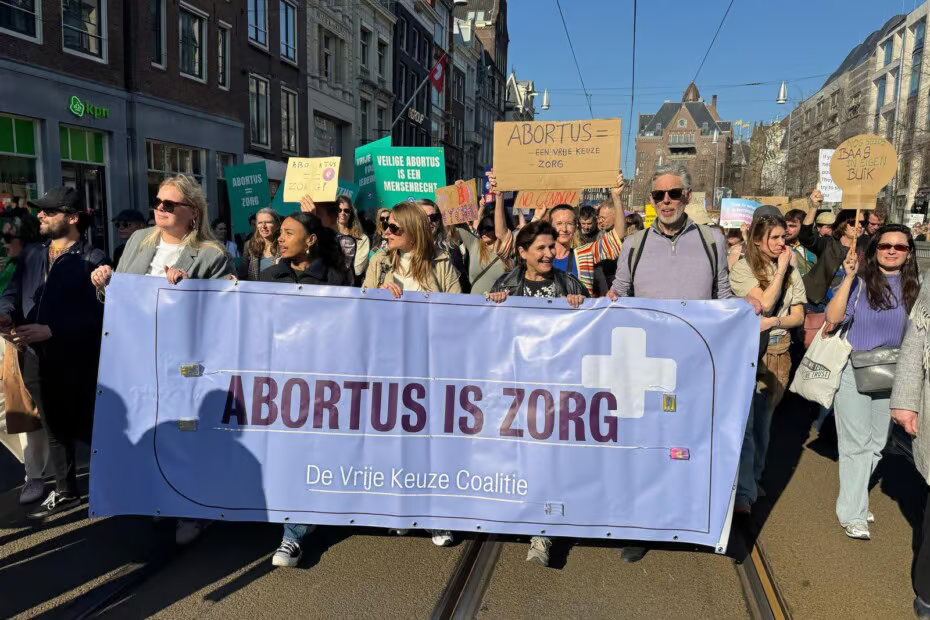
Credits: Lilianne Ploumen
By Lilianne Ploumen
The Netherlands is often presented as a country where reproductive health and rights are well protected. In many respects, that image mirrors reality. Evaluations of the Dutch Termination of Pregnancy Act (Wafz) consistently show that the quality of abortion care is high and that the implementation of the legislation works well. The Dutch Abortion Act (Wet afbreking zwangerschap, Wafz), in force since 1984, has been improved recently. The mandatory waiting period for women seeking an abortion is abolished. Where before, women had to wait 5 days before the procedure could be performed, a relict from patriarchy, she now has access to the procedure after a first consult. Trained general practitioners can prescribe abortion medication during the first nine weeks of pregnancy, where before medical abortion was only accessible in abortion clinics.
Yet appearances can be deceptive. Equal legal access does not necessarily translate into equal access in practice. Significant inequalities remain, affecting who can obtain abortion care, how easily they can access it, and under what circumstances. Although abortion is widely recognized as healthcare, it remains regulated through the Criminal Code, reinforcing the perception that abortion is fundamentally different from other forms of medical care.
This blog explores how the criminalization of abortion contributes to unequal access and argues that regulating abortion exclusively through health law would better protect both reproductive rights and equality in access to healthcare.
The current legal framework
Dutch abortion law is based on Article 296 of the Dutch Criminal Code. Performing an abortion is a criminal offence unless it is carried out by an authorized physician in a licensed hospital or abortion clinic in accordance with the Wafz. General practitioners are allowed to prescribe the abortion pill, once they have taken the mandatory training. In addition, Article 82a of the Criminal Code considers the termination of a pregnancy in case of a fetus that could reasonably survive outside the womb, to constitute deprivation of life. In practice, this means that abortion up to 24 weeks of pregnancy is regulated through the Wafz and the accompanying Decree on the Termination of Pregnancy (Besluit afbreking zwangerschap, Bafz). The Wafz is the legal framework determining the conditions under which an abortion can be performed. The Bafz describes in detail how healthcare providers must comply with the legal requirements. The Bafz is an Order in Council (Algemene Maatregel van Bestuur).
The result is a legal system in which abortion is simultaneously recognised as healthcare and treated as an exception to criminal law.
Unequal access of abortion care in practice
Although abortion is legally available to all women who need an abortion, not everyone who needs an abortion has equal access.
Undocumented women and women without health insurance, like international students, often face substantial financial barriers because they are not covered by the Dutch Health Insurance Act and generally do not receive reimbursement for abortion care in clinics.
Although young people have legal access to abortion services, many report feelings of shame, concerns about confidentiality and fear of negative reactions from parents or their peers. Research indicates that around 60% of women under the age of 25 find it difficult to talk openly about abortion, causing some to delay seeking care.
Women in socio-economically vulnerable situations encounter obstacles to access care. These include travel expenses, arranging childcare, taking time off work, fear of having to explain their absence to a controlling partner and limited knowledge about available support services. These factors can significantly delay access to abortion care.
Geographical location also matters. Women living in regions without a nearby abortion clinic, such as Zeeland or the Waddeneilanden, may need to travel several hours to reach the nearest clinic. The 2020 evaluation of the Wafz noted that when hospitals refuse to provide abortions, women must travel elsewhere, further reducing equal access.
Some professionals experience uncertainty or reluctance when discussing or providing abortion care. This so-called ‘chilling effect’, caused by the fact that abortion is in the Criminal Code, can affect access to abortion care for people who need it. This refers to the risk that fewer healthcare professionals will be willing to perform the procedure. In the long term, this could lead to a loss of experience, knowledge, and skills.
Progress, but not enough
Recent reforms have improved access. Since 2025, trained general practitioners may subscribe medical abortion, making care available closer to home. Digital healthcare also contributes to more equal access. Thuisabortus.nl, an online service, provides medical abortion in accordance with (inter)national clinical guidelines, offering an alternative for women who would otherwise experience practical, geographical or personal barriers to access abortion medication.
These developments represent meaningful progress. However, they do not address the underlying legal framework that continues to set abortion apart from other forms of healthcare.
Why decriminalization matters
The most important step towards reducing inequalities is the decriminalization of abortion.
The World Health Organization explicitly recommends that abortion be regulated through health law rather than criminal law. In its ‘Abortion Care Guideline’ and its ‘Law and Policy Practice Guide for Quality Abortion Care’, the WHO concludes that criminalization contributes to stigma, delays access to care and disproportionately affects people in vulnerable situations. The WHO further emphasizes that states should repeal criminal laws restricting abortion and ensure equal access, particularly for groups facing multiple forms of discrimination, including people with limited financial resources, those living in rural areas and members of minority communities.
International human rights law points in the same direction. Access to abortion forms part of the right to privacy and bodily autonomy protected by Article 8 of the European Convention on Human Rights and is an essential component of the right to health. UN treaty bodies, including the Committee on the Elimination of Discrimination against Women (CEDAW) and the Committee on Economic, Social and Cultural Rights (CESCR), have repeatedly urged states to ensure safe, legal and effective abortion services and to remove legal barriers that undermine reproductive autonomy. The UN Special Rapporteur to Health has argued that criminal laws restricting abortion violate women's dignity and autonomy by limiting their ability to make decisions about their own reproductive health.
Dutch legal scholars have reached similar conclusions. As van Noorloos and others argue, the continued criminalization of abortion requires a legal justification. The protection of prenatal life does not sufficiently justify criminal sanctions against abortions performed with the pregnant person's consent before the legal viability limit. Instead, maintaining abortion within criminal law contributes to stigma without offering additional protection. Existing healthcare legislation, the Quality of Care Act (Wkggz), the Medical Treatment Contracts Act (WGBO) and the Individual Healthcare Professions Act (BIG). already provides the necessary legal safeguards.
Removing abortion from the Criminal Code would not reduce legal protection for women. On the contrary, abortion would continue to be regulated through the same legal framework that governs all the other types of medical care. Existing healthcare legislation, including the already mentioned Quality of Care Act (Wkkgz), the Medical Treatment Contracts Act (WGBO) and the Individual Healthcare Professions Act (BIG), already provide comprehensive safeguards for quality, patient safety, professional accountability and oversight. Where healthcare professionals violate professional standards, disciplinary, administrative and civil law mechanisms are available. General criminal law would continue to protect women against abortions performed without their consent.
In conclusion
The Netherlands has taken important steps towards improving access to abortion care. The abolition of the mandatory waiting period and the introduction of abortion care through general practitioners represent significant progress. Nevertheless, legal access is not the same as equal access. Financial barriers, geographical inequalities, social stigma and the chilling effect experienced by healthcare professionals continue to limit access for people who need an abortion. These inequalities are a result of and reinforced by the continued criminalization of abortion.
Abortion is healthcare and it should be regulated as healthcare, placing it in the safeguards that our health law system provides and removing it from the shackles of the Criminal Code.
Bio

Lilianne Ploumen, LL.M., MA, is Senior Advisor at Bureau Clara Wichmann, advancing women’s rights through strategic litigation and access to justice. She was a member of Parliament of the Netherlands from 2017 to 2022 and was Leader of PvdA (Labour Party) until April 2022. Before that, Lilianne Ploumen served as Minister for Foreign Trade and Development Cooperation. She has been promoting and defending human rights in her political capacities as well as in her work at several NGO’s, among them Mama Cash and Cordaid. She holds several Supervisory Board positions in the Netherlands and is member of the Supervisory Board of IPAS.