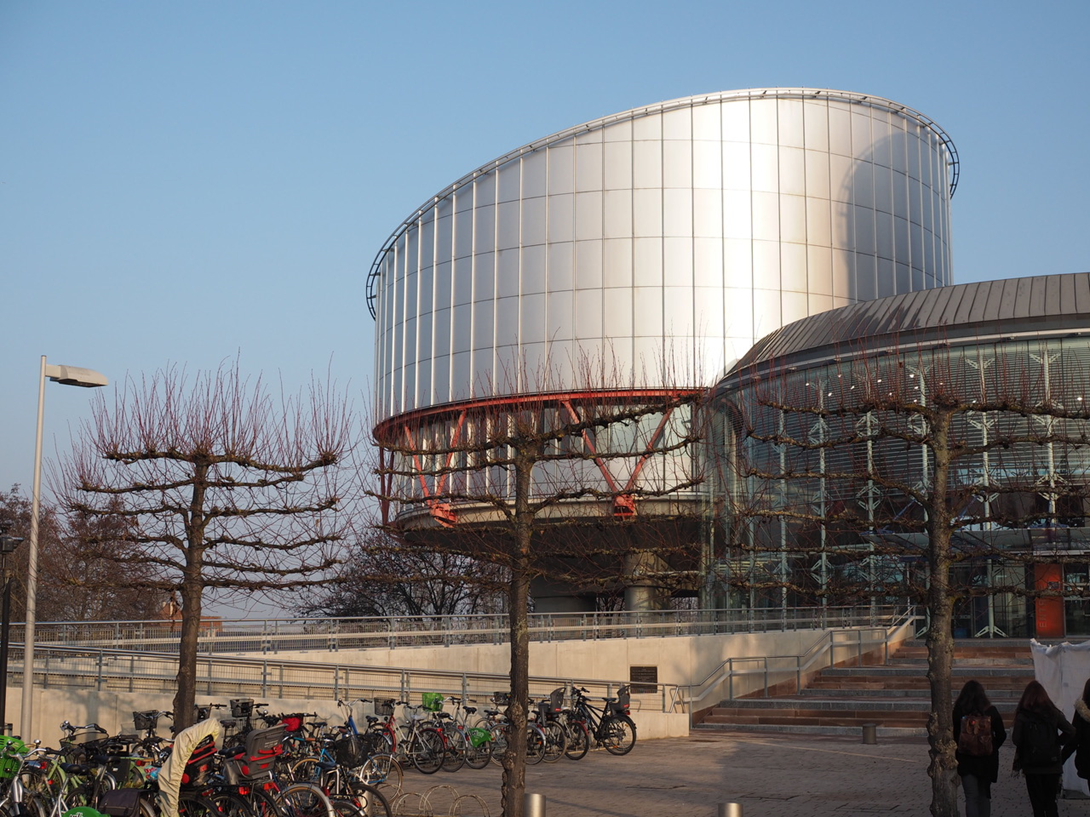
Credits: Antenor Hallo de Wolf
By: Giulia Belgrado and Dr Kushtrim Istrefi
This blogpost draws upon an event entitled The ECHR Under Pressure. This was the first meeting of the recently established AGORA Group, an informal, independent, pan-European platform committed to open dialogue, rigorous inquiry, and balanced, evidence-based debate on key issues concerning the European Convention on Human Rights. The event focused on the ongoing discussions and future ministerial declaration, known as the Chișinău Declaration on the ECHR. The event has been supported by the generous grant of the Netherlands Network of Human Rights Research (NNHRR) and the Netherlands Institute of Human Rights (SIM).
Introduction
On 27 March 2026, the AGORA Group had its first in-person meeting that brought together more than 30 leading scholars and practitioners in the field of ECHR law from different parts of Europe. This event was shaped by the forthcoming Chișinău declaration on migration to be adopted at the 135th Session of the Council of Europe's Committee of Ministers in May, and against the backdrop of the letter of 9 and joint declaration of the 27, letters from the Council of Europe member states on migration and deportation. This was a timely moment to diagnose what is happening to the ECHR system and to ask what can be done.
The overarching concern raised at the outset was that human rights discourse in Europe seems to be shifting backwards, at least in the political circles. At the heart of this recent shift, lies a decade of intensifying migration into Europe with member states increasingly seeking to curtail protections for irregular migrants, raising deeper questions about what the future holds for all vulnerable communities.
First session: Taking Stock of Statements and Reports Leading to the Chișinău Declaration
The first session, chaired by Ed Bates and with pitches from Andrew Forde and Alice Donald, opened with an analysis of the above documents leading to the Chișinău declaration. The Letter of 9, which portrayed “illegal migrants who commit crimes” as ungrateful for the hospitality of their host states, called for changes in the way we view human rights. As the letter states, “what was once right might not be the answer of tomorrow” and the European Court of Human Rights’ progressive interpretation of human rights is preventing states from protecting democratic societies. Similarly, the “joint statement of 27 states” was also examined at length, with attention to its instrumentalization of migration as a way for states to invoke security and sovereignty and go as far as to claim that irregular migrants should not benefit from standard human rights protections. Great attention was paid to the CDDH report which deatails potential elements to be included in the Chisinau declaration, and how one should read some of its recommendations in the current political climate.
The discussion here centered around issues of legitimacy, the importance of facts-based dialogue, the risks of the regressive nature of those two statements, and alternative avenues of states’ engagement with the Court. Several participants also noted that while a large number of states have joined voices of criticism towards the Court, we should be mindful of the polls that suggest wide popular support for the Court and the Convention. Hence, we must also differentiate the position of states, and what people at large think about the Convention and the Court.
Session 2: The Future of the Convention and the Court
The second session, chaired by Kushtrim Istrefi with pitches from Paul Lemmens and Corina Heri, grappled with the Court's identity, purpose, and resilience in the pressing times. It opened by situating the debate in a broader moment of paradigm shift in international law, one in which states are increasingly withdrawing from multilateral institutions and isolating themselves from human rights responsibilities. Some participants noted that the Court seems to have internalized mindsets of caution and efficiency, in an effort to maintain legitimacy and effectiveness moving forward. However, it was also stressed the importance of coupling that with the quality and legitimacy of its reasonings. The conversation centered around the current struggle of the Court to ensure both its survival and its internal normative project: to advance the protection of human rights without leaving certain vulnerable groups behind. Overall, the future of the Court was characterized as hopeful.
Session 3: How should academia respond? By speaking to the unconverted!
The third session of the day, chaired by Alice Donald with pitches from Hélène Tigroudja and Michael O'Boyle, produced one of the clearest consensuses of the day: that academics must not only speak to each other but also engage with policymakers, and most importantly with the public, and in a more accessible language.
The challenges to human rights are unprecedented, but there is no room for despair. Defending human rights has always been a struggle. At the same time, we need to cultivate a spirit of introspection and consider new approaches to engagement and alternative tools for promoting human rights. This is also relevant in the context of teaching human rights, which in recent years has become more technical and distanced from the philosophy of human rights. Academics must be willing to discuss the underlying philosophy and values of human rights, to reflect on why their protection is important, for instance by looking back at judgements and assessing what has changed 10 or 20 years later to celebrate how far human rights protection has come, and why it is important for institutions like the ECtHR to be protected. To communicate these ideas to the public, it was encouraged for academics to receive media training, to learn how to lend expert opinions in a way that is digestible to the greater public, to combat human rights fatigue and bring human rights back where they belong, to humans.
Likewise, some participants suggested that the Court should promote stories of human rights cases, in which not only the vulnerable groups, but also others have benefited from the judgments of the Court. Human rights scholars and the Court should contribute to making human rights of all more accessible, so that people also feel a responsibility to protect rights.
Session 4: Current and Future of the AGORA
The last session, chaired by Andrew Forde, warmly celebrated the role of AGORA and what it has achieved in bringing more than 800 human rights researchers and practitioners together. Participants had come from all over Europe, and this was felt not only in the quality of discussions, but also in the vibrant air that filled the room. AGORA was celebrated mainly as a networking platform, a breeding ground for researchers to collaborate on cross-border research and share methodologies and insights.
While the challenges discussed throughout the day spoke loudly, the resolve and optimism of the AGORA members spoke louder. The rich discussions and the strong sense of community and collegiality were both inspiring and empowering.
Bios

Giulia Belgrado is a Student Assistant at the Netherlands Institute of Human Rights (SIM) at Utrecht University, where she is also completing a Master's degree in Legal Research. She holds an LLB in International and European Law from the University of Groningen. Her research interests centre on the European Convention on Human Rights and its relationship with the European Union.
Dr Kushtrim Istrefi is an Associate Professor of Human Rights Law at Utrecht University.