Credits: Netherlands Network for Human Rights Research Business and Human Rights Working Group
By Silvia Ciacchi, Eva Meyermans Spelmans, and Nicky Touw
On June 1st 2026, with the 15th anniversary of the UN Guiding Principles on Business and Human Rights (UNGPs) around the corner, the NNHRR Business and Human Rights Working Group (BHRWG) held its annual event.
In its 15 years of institutionalisation and conceptual evolution, Human Rights Due Diligence (HRDD) has moved from soft law and best practice to an institutionalised element of corporate governance. Today, this trajectory is culminating in a growing body of mandatory HRDD frameworks across Europe, such as the European Union Deforestation Regulation (EUDR), the Forced Labour Regulation (FLR) and, most prominently, the Corporate Sustainability Due Diligence Directive (CSDDD).
This process of institutionalisation brings both clear prospects and complexity. On the one hand, it promises to reshape how businesses perceive and manage human rights risks. New compliance demands, enforcement dynamics, and liability risks force businesses to take HRDD seriously. On the other hand, concerns arise. Is the legal design of these instruments sufficiently responsive to the operational realities of companies? Is it capable of fostering proactive, meaningful approaches to human rights due diligence? Or will the move from soft to hard law push companies towards superficial, paper-based compliance?
On June 1st, the Working Group explored this perceived tension, with a format designed around collaboration and interactive exchange.
The workshop format: dialogue and mutual learning
In a field such as business and human rights (BHR), the doctrinal-theoretical perspective of academia and the grounded experience of practitioners fill different parts of the picture. The normative foundations of HRDD and its everyday practice are both equally important when fostering proactive and meaningful approaches. With its annual event, the BHRWG sought to give space to these different perspectives, creating an environment where researchers, business actors, civil society and independent BHR experts could share in dialogue and mutual learning.
The programme opened with an academic and a practitioner keynote. Following, two panel sessions explored upstream and downstream HRDD issues, through academic, practitioner, and hybrid-profiled speakers, engaging in dynamic conversation. In the afternoon, the speakers joined the participants, divided into groups each comprising early- and advanced-career researchers and practitioners from NGO, business and independent backgrounds. The groups were led through interactive and hands-on case studies (one focused on the upstream issues, the other focused on the downstream issues); exploring realistic hypothetical HRDD scenarios; brainstorming approaches, issues, and opportunities; and sharing insights from personal and professional experience.
Throughout the workshop, the Chatham House Rule was instrumental in encouraging and fostering inclusive and open dialogue.
Insights on upstream due diligence in the garment sector
The upstream garment industry is known for its complex structure, sheer size, and poor working conditions worsened by climate change (for more information, see here, here, here and here). The value of the case study became immediately clear, as the less experienced participants were confronted with the need to make practical choices in the due diligence process. Something as simple as knowing where to start and who to approach when conducting a risk-assessment, even in a hypothetical scenario, may already be very difficult in a highly complex situation.
From the ensuing discussion, two insights can be highlighted.
The first is the role of the Tier 1 supplier, which, in this sector, according to different participants, often becomes a strategic nexus that the company must rely on to conduct meaningful due diligence. Long-term relationships built around trust and good material conditions are crucial to preserve this function. This points to transparency and capacity-building as critical elements of HRDD. Beyond this, cooperation and advocacy within the company also emerged throughout the day’s discussion as necessary steps towards meaningful improvement of business practices.
The second insight relates to irresponsible disengagement, which, according to some of the participants, may be the strategy pushed within the company to minimise legal risk . The issue is paradoxical, as continued engagement and exercise of leverage would be the course of action for meaningful HRDD. Hasty disengagement cuts off the flow of information and can lead to loss of jobs and livelihood, leaving adverse impacts unaddressed at best and worsening at worst.
This underscores the issue of legal design. For example, there is a risk that import-ban legislation – such as the EU Forced Labour Regulation – may conflict with the responsible disengagement framework of the CSDDD, ultimately steering business practices away from the UNGPs-compatible compliance strategies.
Insights on downstream due diligence in conflict-afflicted areas
Human rights risks are not limited to a firm’s own operations or supply chain but can also arise when a product or service leaves the company: in the ‘downstream’ part of the value chain. When a business operates in or sells to end-users in Conflict-Affected and High-Risk Areas (CAHRAs), the standard should be heightened HRDD: the process of assessing and addressing a company’s actual and potential impacts on human rights and on the conflict.
The UNGPs do not differentiate between up- and downstream due diligence, whilst the CSDDD does. This raised the issue of whether upstream and downstream due diligence actually require different approaches. The ensuing discussion and case-study work highlighted two insights. Firstly, the UNGPs remain more relevant than ever, considering that the downstream is not as comprehensively regulated in the binding frameworks. Secondly, HRDD in CAHRAs comes with special challenges due to the fast-paced shifting of conflict dynamics and the critical severity of adverse impacts where war crimes may be involved.
In all cases, creating transparency and dialogue remain equally important. In this respect, it was emphasised that, also for downstream due diligence, one should remember the spirit and not just the letter of the law.
Conclusion: the importance of community-building
The workshop’s format brought valuable insights to the surface. Some of these insights even challenged the very assumptions that the workshop was built on. Hard-law instruments such as the CSDDD are meaningful milestones that create opportunity, and their impact on practices will come down to interpretation. Box-ticking remains a risk, and legal design is far from perfect. However, the worry that the CSDDD and other hard law will automatically push companies towards paper-based compliance may be overstated. The CSDDD continues to entrench the UNGPs and reinforces the responsibility and accountability of companies. The open-textured nature of its ‘appropriate measures’ creates space for proactive interpretations, and this should be the focus of the conversation going forward.
More than any individual finding, what emerged from the day is the value of spaces in which to have these conversations. These are the spaces in which to foster a diverse community that can help the BHR field strengthen and grow.
The Working Group is committed to continuing this community-building and to creating even more inclusive opportunities for practitioner-academic knowledge sharing. With the new academic year now on the roll, stay tuned and join us in our endeavours to come!
The workshop was partly supported by the small grants scheme of the research initiative on Rebalancing Public & Private Interests and Erasmus Center of Empirical Legal Studies of Erasmus School of Law and the sector plan for law funding of the Ministry of Education, Culture and Research.
Bio
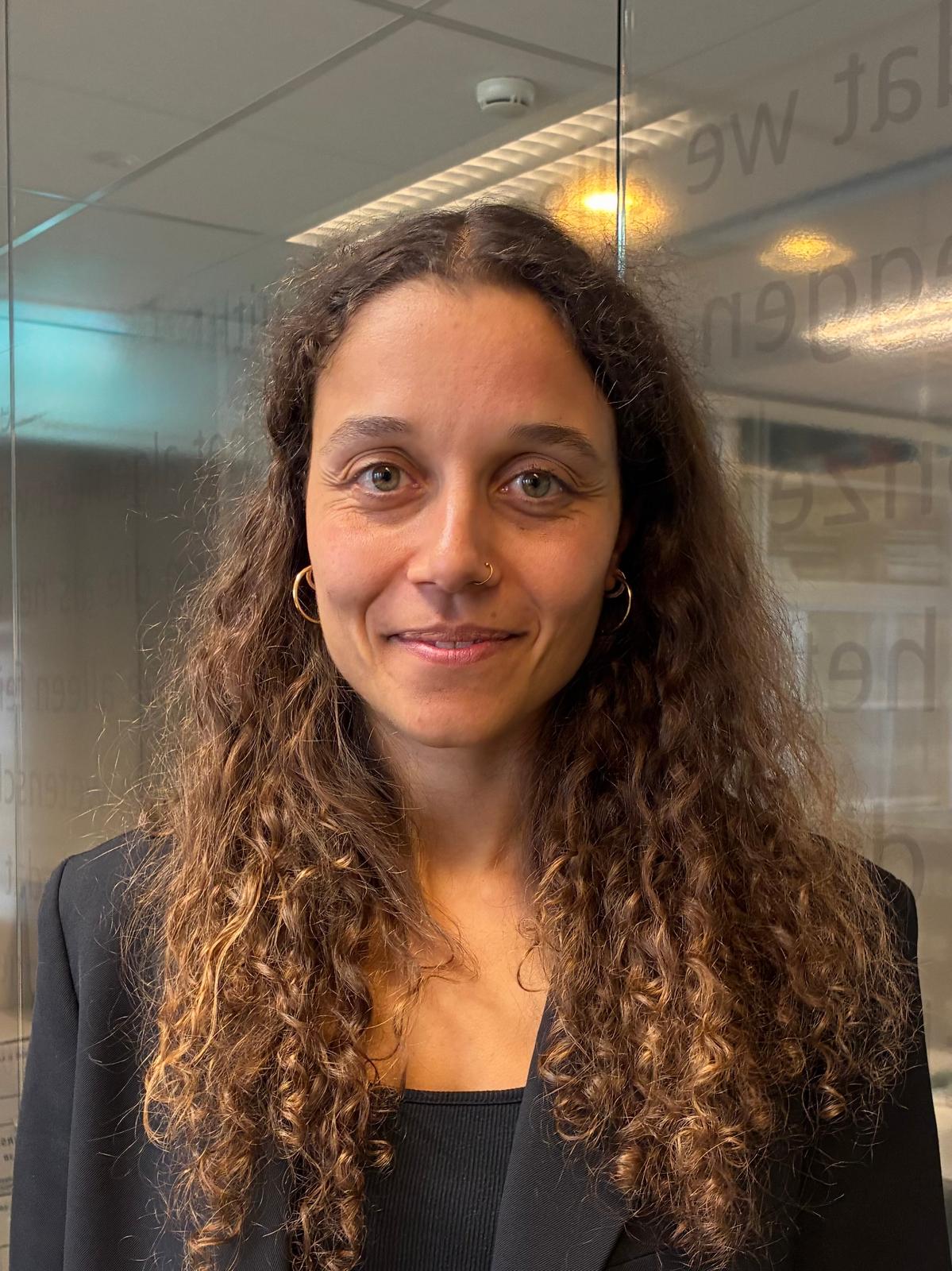
Nicky Touw works as Assistant Professor at the department of criminal law at the Vrije Universiteit in Amsterdam. Her research focuses on the role of corporate reporting and due diligence obligations in the prosecutions of companies for their involvement in crimes linked to resource related conflicts.

Eva Meyermans Spelmans is a PhD Researcher at Erasmus University Rotterdam at the Law and Markets department. Her research focuses on the role of European law in transforming the textile industry's global value chain to a circular and sustainable economy.

Silvia Ciacchi is a researcher and independent consultant specialising in Business and Human Rights, EU law, and corporate sustainability due diligence. Her work combines legal and interdisciplinary research with applied projects, focusing on the regulation of global value chains, corporate accountability, and the practical implementation of sustainability and human rights due diligence.