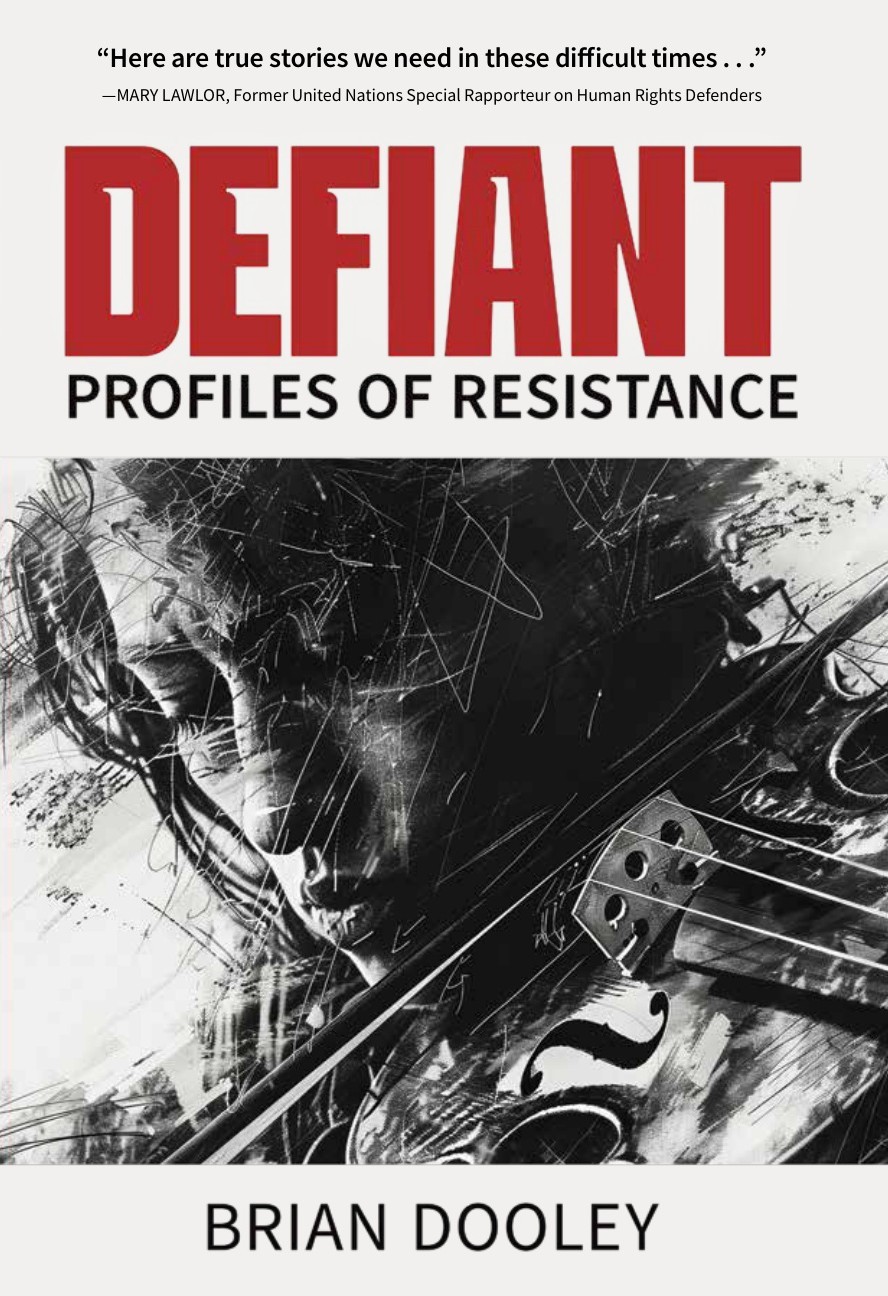
Credits: Brian Dooley, Humanitas Media (book jacket art)
By Brian Dooley
When she arrived home one evening, Iryna Fedoriv saw a memorial plaque bearing her name had been put on the building where she lived. It was a warning after she had exposed local corruption in Ukraine. She didn't think of herself as an activist. Neither did the Bosnian schoolteacher who took on a mining company, the Czech woman whose social media post sparked a movement to reform the country's rape laws, or the mother and daughter in Poland who risked prosecution for sheltering migrants in their home.
After 35 years working for some of the world’s most prominent human rights organizations, I had seen how easily the stories of ordinary people defending human rights outside established institutions could be overlooked. Many had no formal training and would never have called themselves activists. These were the people I set out to find for my book,
They did not begin with an ideology, a strategy, or an ambition to create a movement. They simply responded to the problem in front of them. A Ukrainian violinist began by transporting medicine after Russia’s invasion and eventually became an ambulance driver on the front lines. In the small coastal city of Trieste, a retired couple, Lorena Fornasir and Gian Andrea Franchi, began washing and treating the injured feet of refugees arriving after dangerous journeys along the Balkan route.
For most of the people I spoke with, there was no single moment when they consciously decided to become activists. Their involvement developed through a series of choices, each one drawing them further in. They kept offering help, speaking up, gathering evidence, refusing to cooperate, or persuading others to join them. People often suddenly appeared to offer help. Some admitted that if they had known at the beginning how difficult or dangerous their work would become, they might never have started.
But what begins as a practical or instinctive response can carry serious consequences once it challenges people and institutions with far greater power. Those involved may not initially realize how fiercely that power will be used against them. Unlike large organizations, they often have no lawyers, security policies, international contacts, or public platforms to protect them. What sustains them is not an absence of fear or doubt, but the knowledge that the original injustice has not gone away.
This is why I don’t describe such people as "fearless" or "tireless." They become frightened and exhausted like anyone else and presenting them as exceptional can make activism seem beyond the reach of anyone but the extraordinary. Their courage is not rooted in some unique capacity for resilience, but in the choices they make to keep going despite fear, uncertainty, and pressure to stop.
We tend to think of activism as something undertaken by an exceptional kind of person: someone especially brave, politically committed, or naturally confrontational. The people I met suggested something different. Activism can begin before someone even has the language to describe it, when an injustice becomes too immediate to ignore. These people did not wait to feel fearless or qualified. They saw something wrong, decided to act, and kept going when stopping would have been easier. None set out to become activists; they became activists because they refused to look away.
Bio
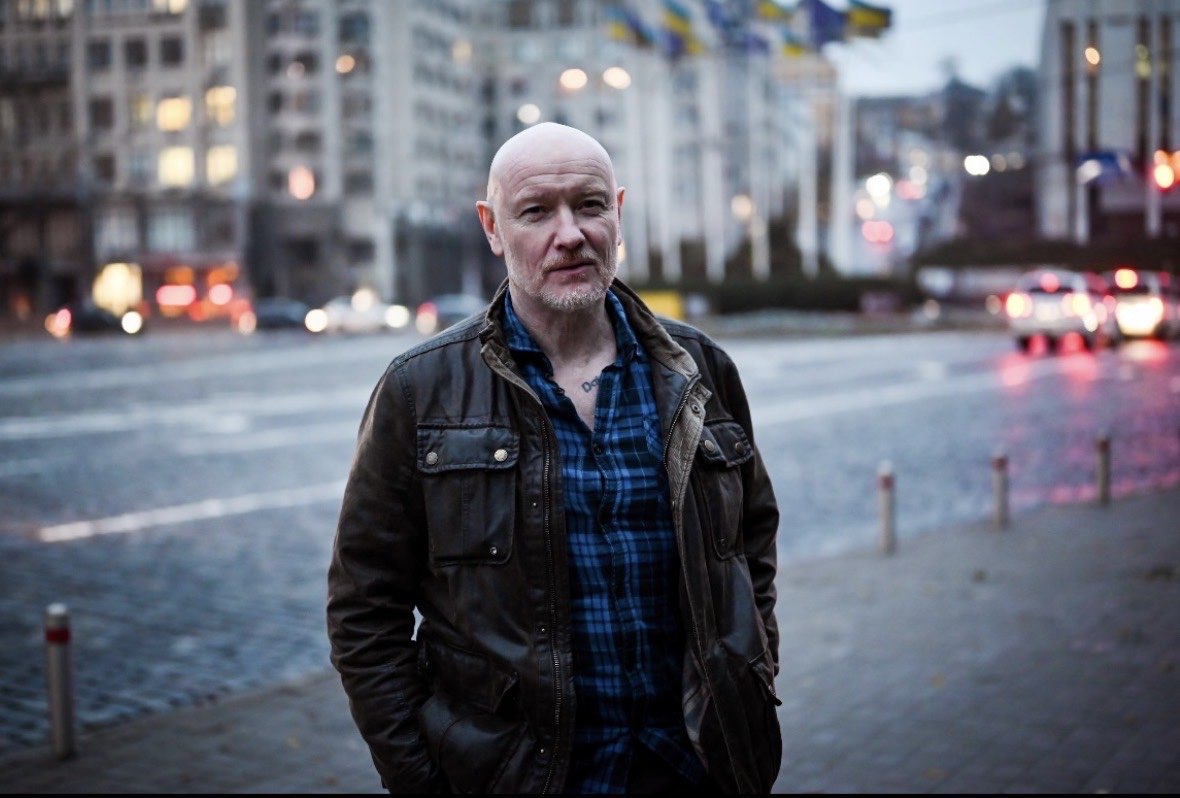
Brian Dooley is a longtime human rights activist specializing in supporting Human Rights Defenders working amid revolutions, armed conflict, and severe repression. His latest book, DEFIANT: Profiles of Resistance, will be published by Humanitas Media in October 2026.